The 2 Types Of Diabetes And How They Differ

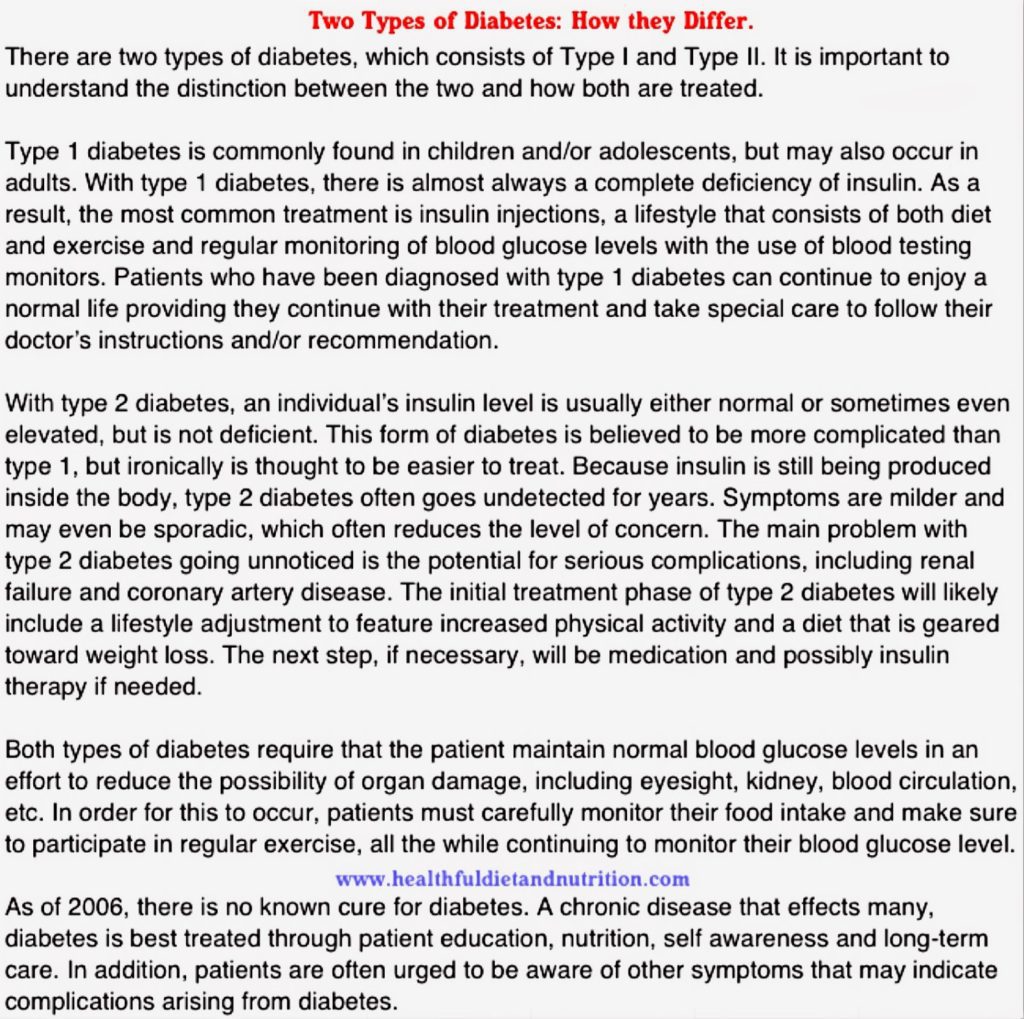
Diabetes is a chronic metabolic disorder characterized by high blood sugar levels due to insufficient insulin production or the body’s inability to effectively use insulin. There are primarily two types: Type 1 diabetes, an autoimmune condition where the pancreas produces little to no insulin, and Type 2 diabetes, which typically develops due to insulin resistance and is often linked to obesity and lifestyle factors. Symptoms include frequent urination, increased thirst, fatigue, and blurred vision. Long-term complications can affect the heart, kidneys, nerves, and eyes. Management includes lifestyle modifications, blood sugar monitoring, and, in some cases, insulin therapy or medication.
CLICK Below to Continue:

 NEXT
NEXT

