50 Ways too much Sugar affect the body

50 Ways too much Sugar affect the body

Excess sugar can lead to weight gain, increased risk of diabetes, heart disease, and dental issues, and may cause energy crashes and mood swings.Sugar addiction poses significant health risks, contributing to obesity, diabetes, and heart disease. It can impair mood and cognitive function while fostering cravings that lead to overeating. Understanding these harmful effects is crucial for promoting healthier dietary choices and preventing long-term consequences. Here is a list of the 50 ways excess sugar affect the body:

Excess sugar can suppress the immune system: Excess sugar can weaken the immune system by reducing white blood cell effectiveness, promoting inflammation, and impairing overall immune response.

Excess sugar upset the mineral relationships in the body: Excess sugar can lead to imbalances, impairing mineral absorption and utilization, affecting calcium, magnesium, and zinc levels in the body.


Excess sugar can cause hyperactivity, anxiety, difficulty concentrating, and crankiness in children due to energy spikes and crashes.

Excess sugar can produce a significant rise in triglycerides: Excess sugar increases insulin levels, promoting fat storage in the liver, leading to elevated triglycerides and increased heart disease risk.

Excess sugar contribute to the reduction in defense against bacterial infection (infectious diseases): Excess sugar weakens immune response, hinders white blood cell function, and promotes inflammation, increasing susceptibility to bacterial infections.

Excess sugar cause a loss of tissue elasticity and function, the more sugar you eat the more elasticity and function you loose. Excess sugar can impair tissue elasticity and function by promoting inflammation, glycation of proteins, and disrupting cellular processes, leading to deterioration.

Excess sugar can lead to prostrate cancer. Excess sugar intake may promote obesity, insulin resistance, and inflammation, which are linked to a higher risk of prostate cancer.

Excess sugar lead to chromium deficiency. Excess sugar intake can interfere with chromium absorption, leading to reduced insulin sensitivity and potential chromium deficiency over time. Chromium Supports metabolism, regulates blood sugar, enhances insulin sensitivity, promotes weight loss.

Excess sugar lead to cancer of the ovaries. Excess sugar promotes insulin resistance, inflammation, and hormonal imbalances, potentially increasing ovarian cancer risk by fueling tumor growth and proliferation.

10. Excess sugar can increase fasting levels of glucose. Excess sugar consumption leads to insulin resistance, impairing glucose uptake and elevating fasting blood glucose levels over time. Elevated fasting blood glucose can cause nerve, kidney, and eye damage.

11. Excess sugar causes copper deficiency. Excess sugar consumption can interfere with copper absorption, hindering its utilization in the body and potentially leading to deficiency. Copper supports immune function, energy production, and promotes healthy bones.

12. Excess sugar interferes with absorption of calcium and magnesium. Excess sugar intake can hinder calcium and magnesium absorption by promoting hormonal imbalances, increasing urinary excretion, and disrupting gut health.

13. Excess sugar can weaken eyesight. Excess sugar can lead to diabetes, causing diabetic retinopathy, cataracts, and blurred vision, ultimately weakening overall eyesight health.

14. Excess sugar raises the level of neurotransmitters: dopamine, serotonin, and norepinephrine which stimulate the brain's reward system leading to temporary mood boosts and cravings.
15. Excess sugar can cause hypoglycemia. Excess sugar intake can lead to insulin overproduction, causing rapid glucose drop and resulting in hypoglycemia symptoms like fatigue and dizziness.
16. Excess sugar can produce an acidic digestive tract. Excess sugar fermentation by gut bacteria increases acid production, leading to an acidic digestive tract and potential digestive issues.

17. Excess sugar can cause a rapid rise of adrenaline levels in children. Excess sugar intake can trigger adrenaline spikes in children, leading to hyperactivity, mood swings, and increased stress responses in their bodies.

18. Excess Sugar causes Sugar malabsorption which is frequent in patients with functional bowel disease. Excess sugar intake overwhelms the intestines, impairing nutrient absorption and damaging the gut lining, ultimately leading to malabsorption.

19. Excess sugar can cause premature aging. Excess sugar leads to glycation, damaging collagen and elastin, resulting in wrinkles, sagging skin, and premature aging signs.

20. Excess sugar can lead to alcoholism. Excess sugar can trigger similar brain rewards as alcohol, potentially leading to cravings, dependence, and increased risk of alcoholism.


21. Excess sugar can cause tooth decay. Excess sugar fuels bacteria in the mouth, producing acids that erode enamel, leading to cavities and tooth decay over time.

22. Excess sugar contributes to obesity. Excess sugar increases calorie intake, promotes fat storage, disrupts metabolism, and fuels cravings, leading to weight gain and obesity.

23. High intake of sugar increases the risk of Crohn's disease, and ulcerative colitis. High sugar intake may disrupt gut bacteria balance, increase inflammation, and worsen gastrointestinal symptoms, raising the risk of Crohn's disease and ulcerative colitis.

24. Excess sugar can impair the structure of DNA. Excess sugar leads to oxidative stress, creating harmful free radicals that can damage DNA structure and impair cellular function.

25. Excess sugar can cause arthritis. Excess sugar can lead to inflammation, affecting joints and potentially worsening arthritis symptoms through increased oxidative stress and immune response.

26. Excess sugar can cause asthma. Excess sugar may increase inflammation and allergic responses, potentially triggering or worsening asthma symptoms in susceptible individuals.

27. Excess sugar greatly assists the uncontrolled growth of Candida Albicans (yeast infections) by providing an ideal environment for fermentation, leading to yeast infections and imbalances.

28. Excess sugar can cause gallstones. Excess sugar intake can elevate triglycerides and cholesterol, disrupting bile balance and increasing the risk of gallstone formation in the gallbladder.

29. Excess sugar can cause heart disease. Excess sugar can lead to obesity, inflammation, and higher triglycerides, increasing the risk of hypertension and heart disease development.

30. Excess sugar can increase the body's fluid. Excess sugar intake leads to higher blood glucose levels, causing the body to retain fluid, resulting in swelling and bloating.

31. Excess sugar can cause multiple sclerosis. Excess sugar may contribute to inflammation and immune dysfunction, potentially increasing the risk of developing multiple sclerosis in susceptible individuals. Multiple sclerosis is a chronic disease affecting the nervous system.

32. Excess sugar can cause hemorrhoids. Excess sugar can lead to obesity, constipation, and inflammation, increasing pressure on veins, which contributes to developing hemorrhoids.

33. Excess sugar can cause varicose veins. Excess sugar can harm blood vessels, increase inflammation, and contribute to obesity, worsening varicose veins by stressing vein walls. Varicose veins are enlarged, twisted veins often appearing in legs and feet.

34. Excess sugar can elevate glucose and insulin responses in oral contraceptive users. Excess sugar in oral contraceptive users can lead to increased glucose and insulin responses, potentially heightening metabolic risks and complications.

35. Excess sugar can compromise the lining of the capillaries. Excess sugar can lead to inflammation and oxidative stress, damaging capillary linings, increasing permeability and risk of cardiovascular issues.

36. Excess sugar can contribute to osteoporosis. Excess sugar consumption can impair calcium absorption, increase inflammation, and contribute to bone loss, increasing osteoporosis risk over time.

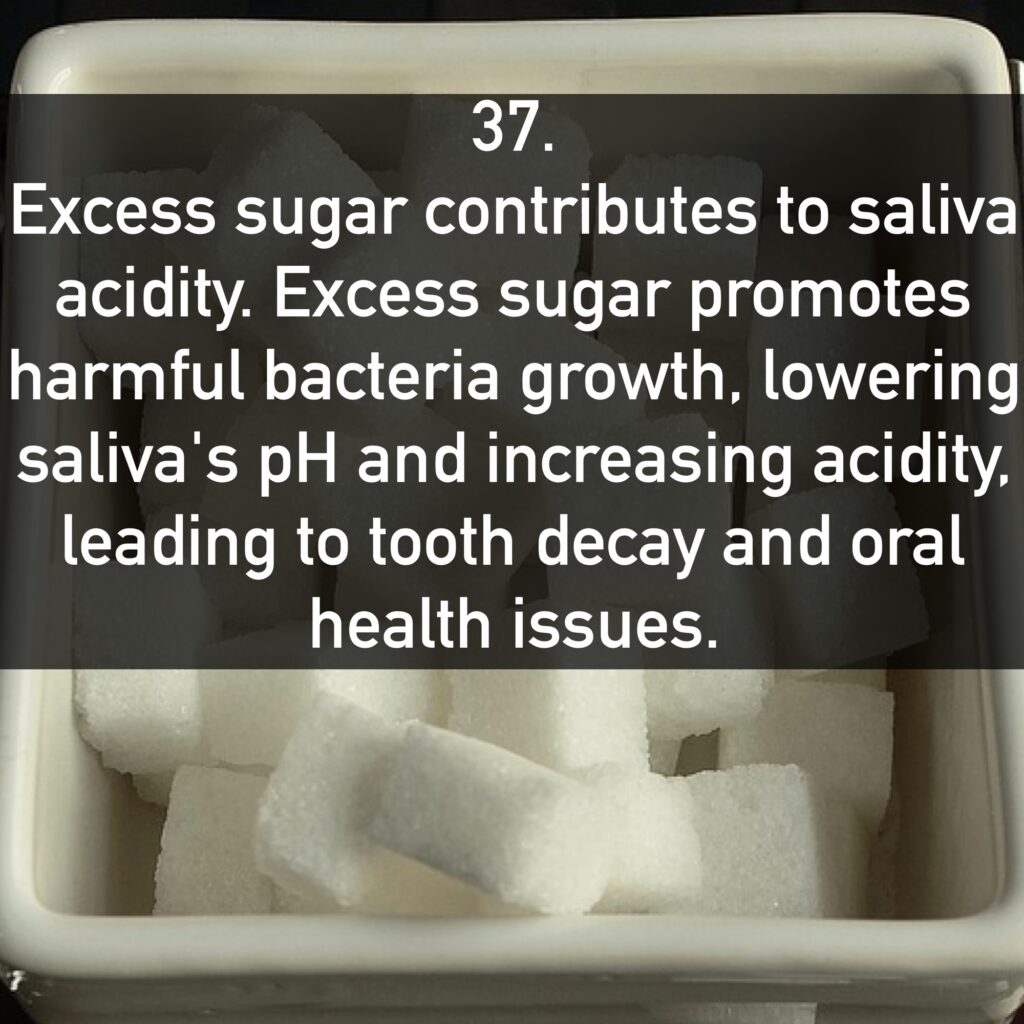
37. Excess sugar contributes to saliva acidity. Excess sugar promotes harmful bacteria growth, lowering saliva's pH and increasing acidity, leading to tooth decay and oral health issues.

38. Excess sugar can cause a decrease in insulin sensitivity. Excess sugar leads to increased insulin secretion, causing cells to become resistant, reducing insulin sensitivity and promoting metabolic issues.

39. Excess sugar can lower the amount of Vitamin E (alpha Tocopherol in the blood), leading to deficiencies due to increased oxidative stress and altered metabolic pathways.

40. Excess sugar can decrease growth hormone. Excess sugar consumption can lead to insulin resistance, which negatively impacts growth hormone secretion and overall metabolic health.

41. Excess sugar can increase LDL (bad) cholesterol. Excess sugar consumption raises insulin levels, increases triglyceride production, and promotes fat storage, contributing to higher LDL (bad) cholesterol levels in blood.

42. Excess sugar can increase the systolic blood pressure which can lead to insulin resistance, inflammation, and weight gain, all of which can elevate systolic blood pressure levels. Systolic blood pressure is the pressure during heartbeats.

43. Excess sugar can lead to energy spikes followed by crashes, causing drowsiness and decreased activity levels in children afterward.

44. Excess sugar causes constipation. Excess sugar disrupts gut bacteria balance, leading to dehydration, sluggish digestion, and reduced fiber intake, ultimately causing constipation.

45. Excess sugar can cause headaches, including migraine. Excess sugar can lead to blood sugar spikes and crashes, triggering inflammation and headaches, including migraines, due to altered neurotransmitter levels.

46. Excess sugar causes food allergies. Excess sugar may disrupt gut microbiota balance, weakening immune response and potentially triggering food allergies in susceptible individuals.

47. Excess sugar can contribute to diabetes. Excess sugar intake can lead to insulin resistance, weight gain, and increased blood glucose levels, significantly raising diabetes risk.

48. Excess sugar can cause toxemia during pregnancy. Excess sugar during pregnancy can lead to gestational diabetes, increasing toxemia risk by causing high blood pressure and associated complications. Toxemia is poisoning from toxic substances in the blood.

49. Excess sugar can contribute to eczema in children. Excess sugar may worsen inflammation, disrupt gut health, and weaken the immune system, potentially exacerbating eczema symptoms in children.

50. Excess sugar can cause cardiovascular diseases. Excess sugar intake can lead to obesity, hypertension, inflammation, and insulin resistance, significantly increasing the risk of cardiovascular diseases.

Conclusion: Limiting sugar consumption is essential for maintaining optimal health. It reduces the risk of chronic diseases, promotes better weight management, and enhances overall well-being. Adopting a balanced diet minimizes sugar intake, fostering longer, healthier lives and improved quality of life.


CLICK “NEXT” Below For More:

NEXT: 10 Facts about Calcium


Discover Our Books Below:

60 Simple Tips to Stay Healthy and Fit


65 Simple Tips for a Healthy Lifestyle