Top 36 Iron Rich Foods

Top 36 Iron Rich Foods

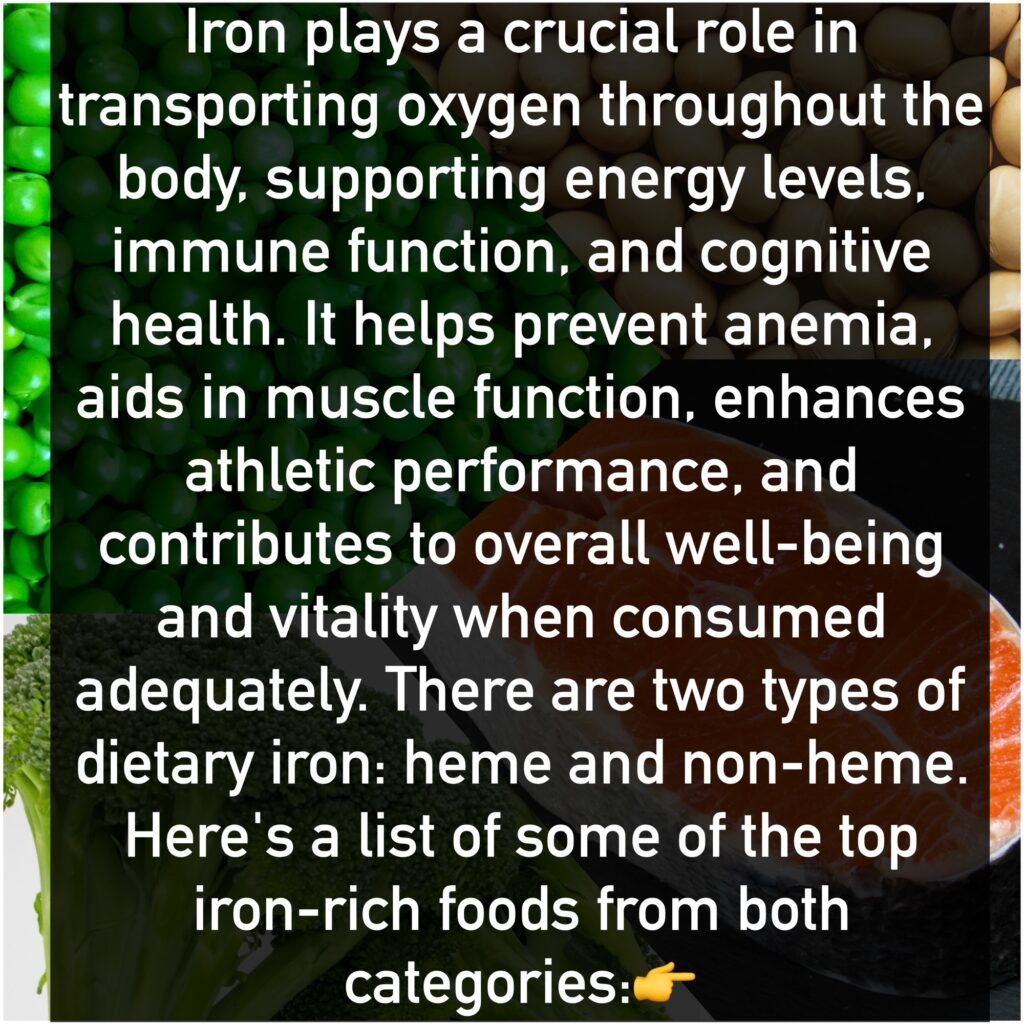
Iron-rich foods are essential for preventing anemia, boosting energy levels, supporting immune function, and promoting overall health, ensuring optimal body performance.Iron plays a crucial role in transporting oxygen throughout the body, supporting energy levels, immune function, and cognitive health. It helps prevent anemia, aids in muscle function, enhances athletic performance, and contributes to overall well-being and vitality when consumed adequately. There are two types of dietary iron: heme and non-heme. Here's a list of some of the top iron-rich foods from both categories:
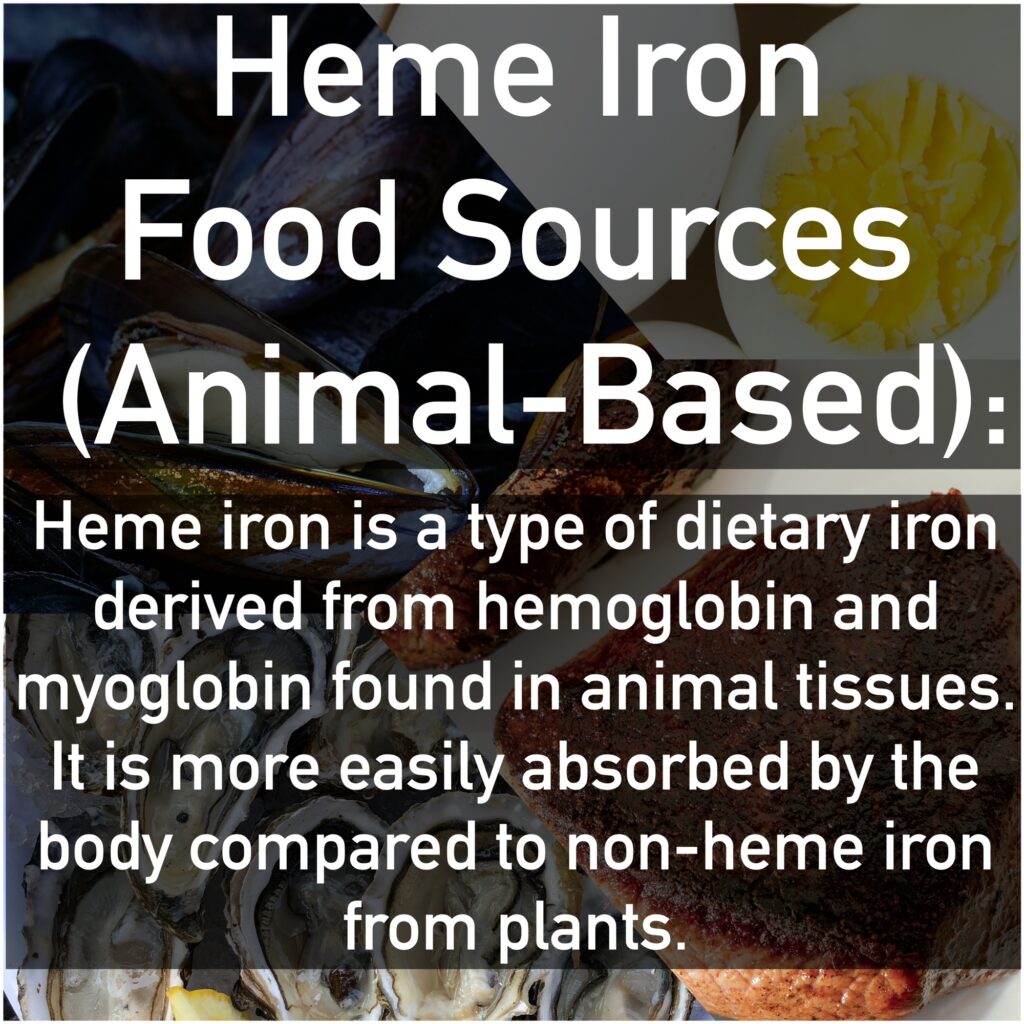
Heme Iron Food Sources (Animal-Based): Heme iron is a type of dietary iron derived from hemoglobin and myoglobin found in animal tissues. It is more easily absorbed by the body compared to non-heme iron from plants.

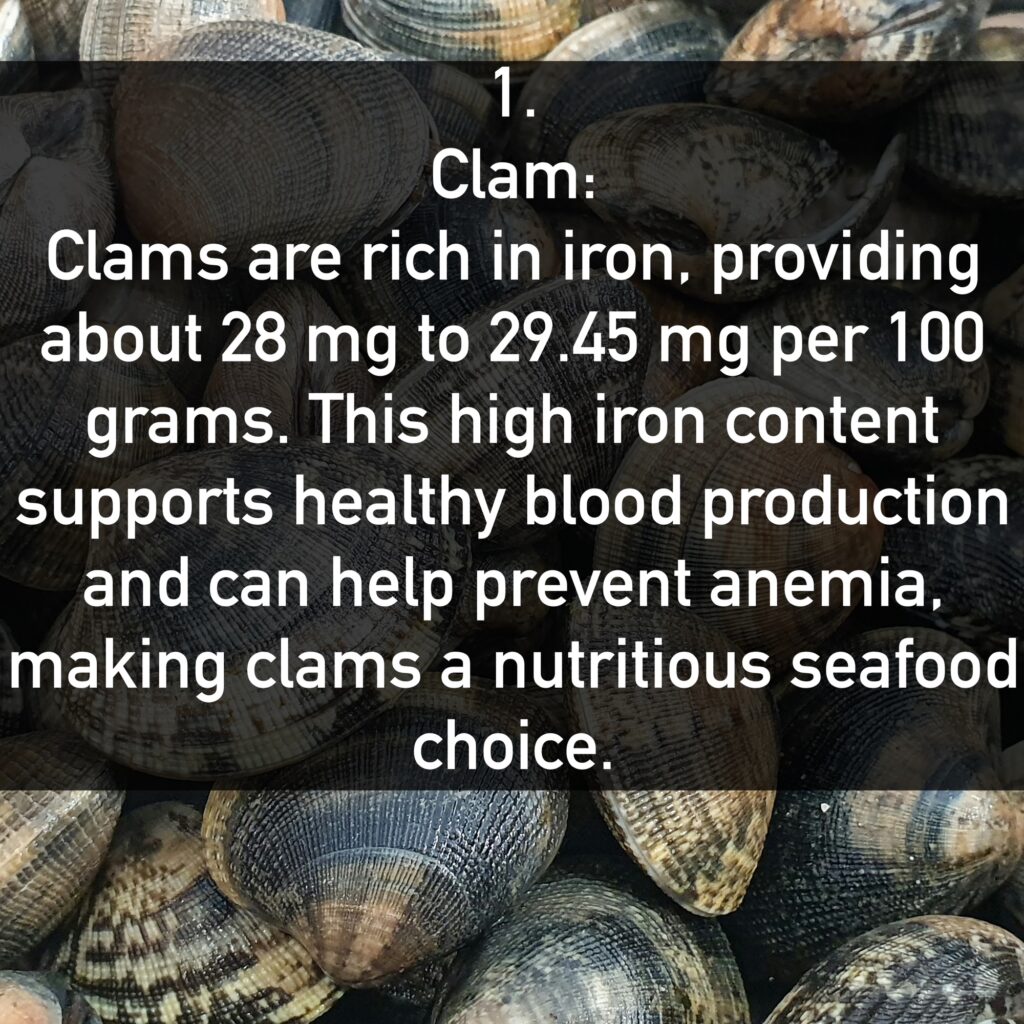
Clam: Clams are rich in iron, providing about 28 mg to 29.45 mg per 100 grams. This high iron content supports healthy blood production and can help prevent anemia, making clams a nutritious seafood choice.
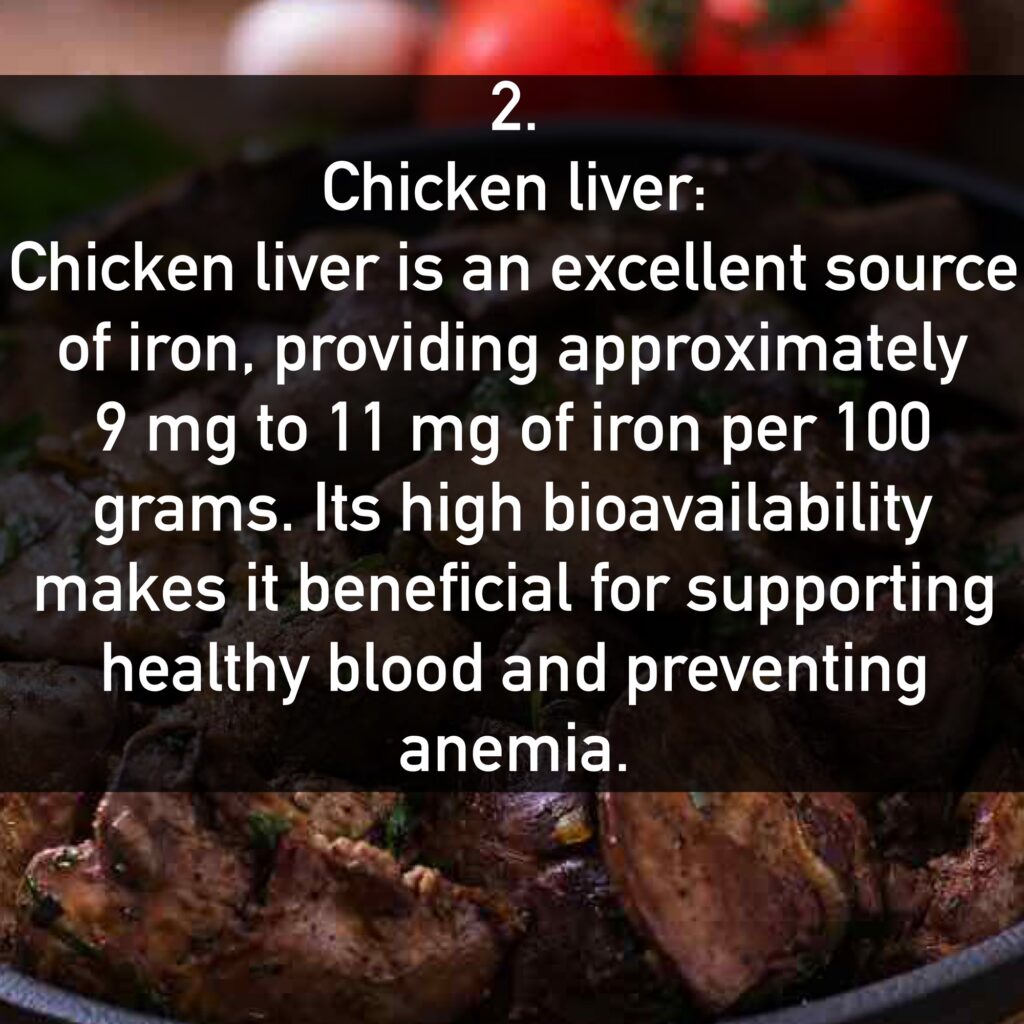
Chicken liver: Chicken liver is an excellent source of iron, providing approximately 9 mg to 11 mg of iron per 100 grams. Its high bioavailability makes it beneficial for supporting healthy blood and preventing anemia.


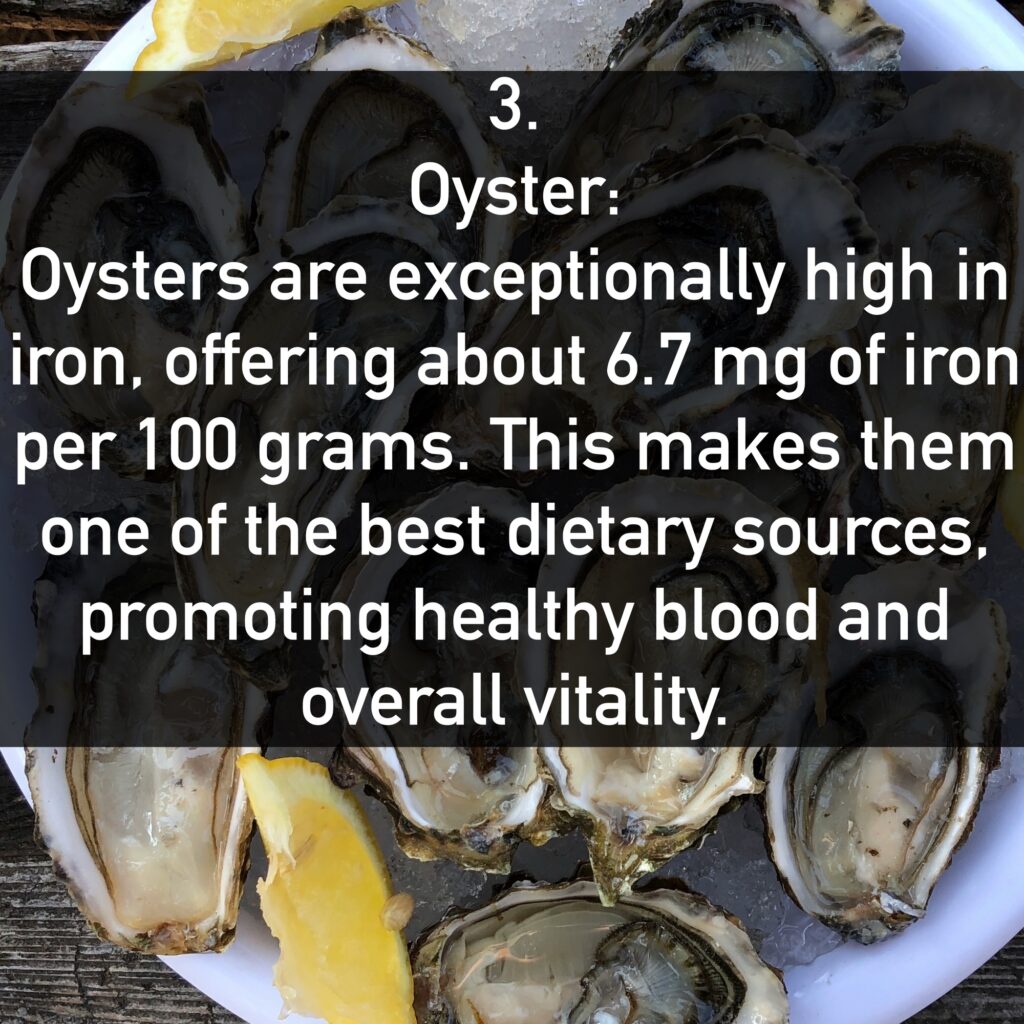
Oyster: Oysters are exceptionally high in iron, offering about 6.7 mg of iron per 100 grams. This makes them one of the best dietary sources. promoting healthy blood and overall vitality.

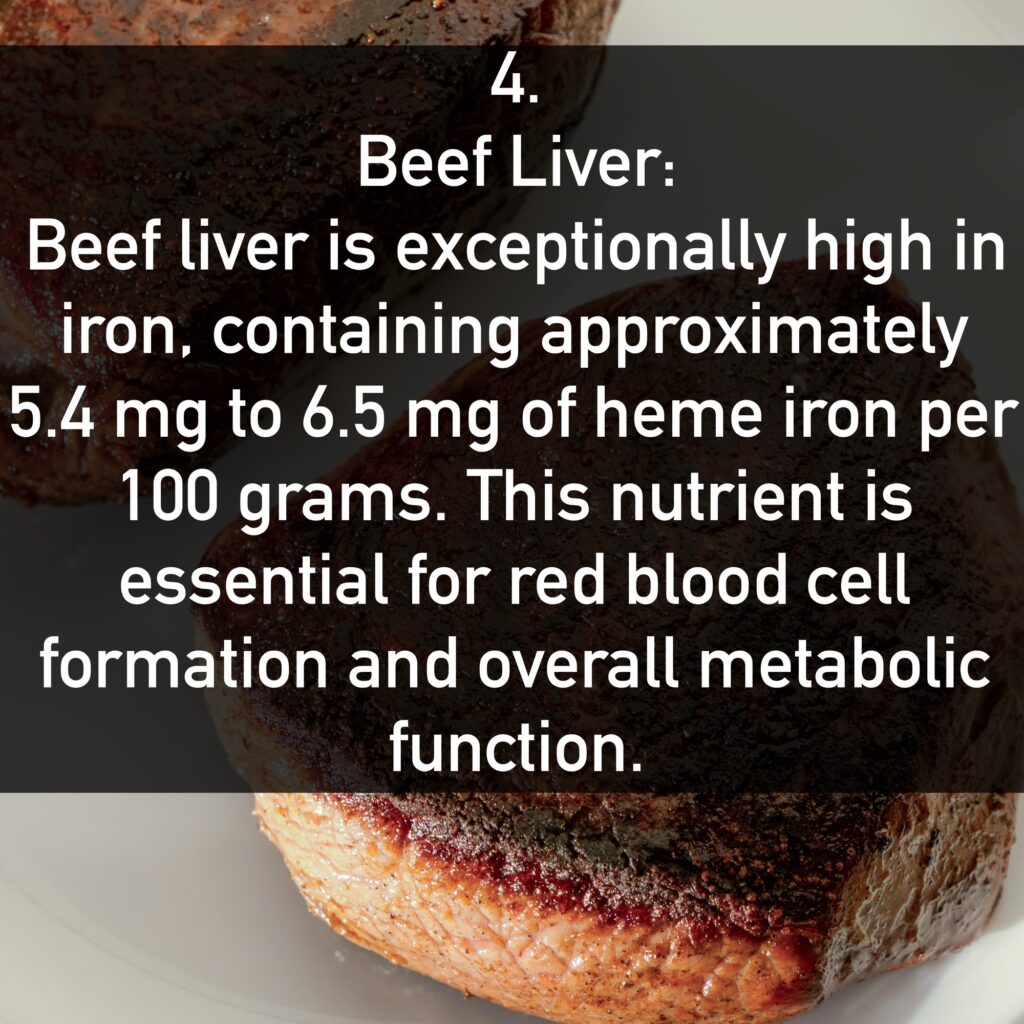
Beef Liver: Beef liver is exceptionally high in iron, containing approximately 5.4 mg to 6.5 mg of heme iron per 100 grams. This nutrient is essential for red blood cell formation and overall metabolic function.

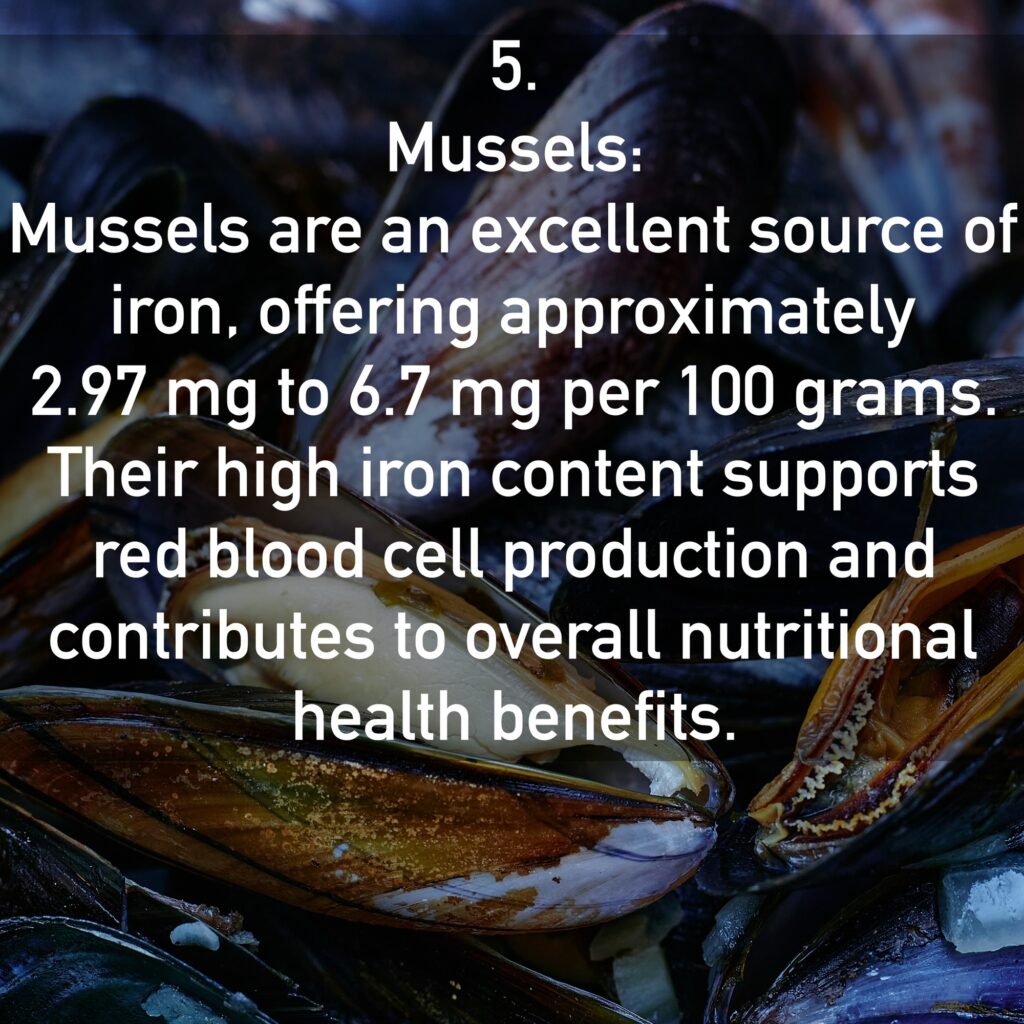
Mussels: Mussels are an excellent source of iron, offering approximately 2.97 mg to 6.7 mg per 100 grams. Their high iron content supports red blood cell production and contributes to overall nutritional health

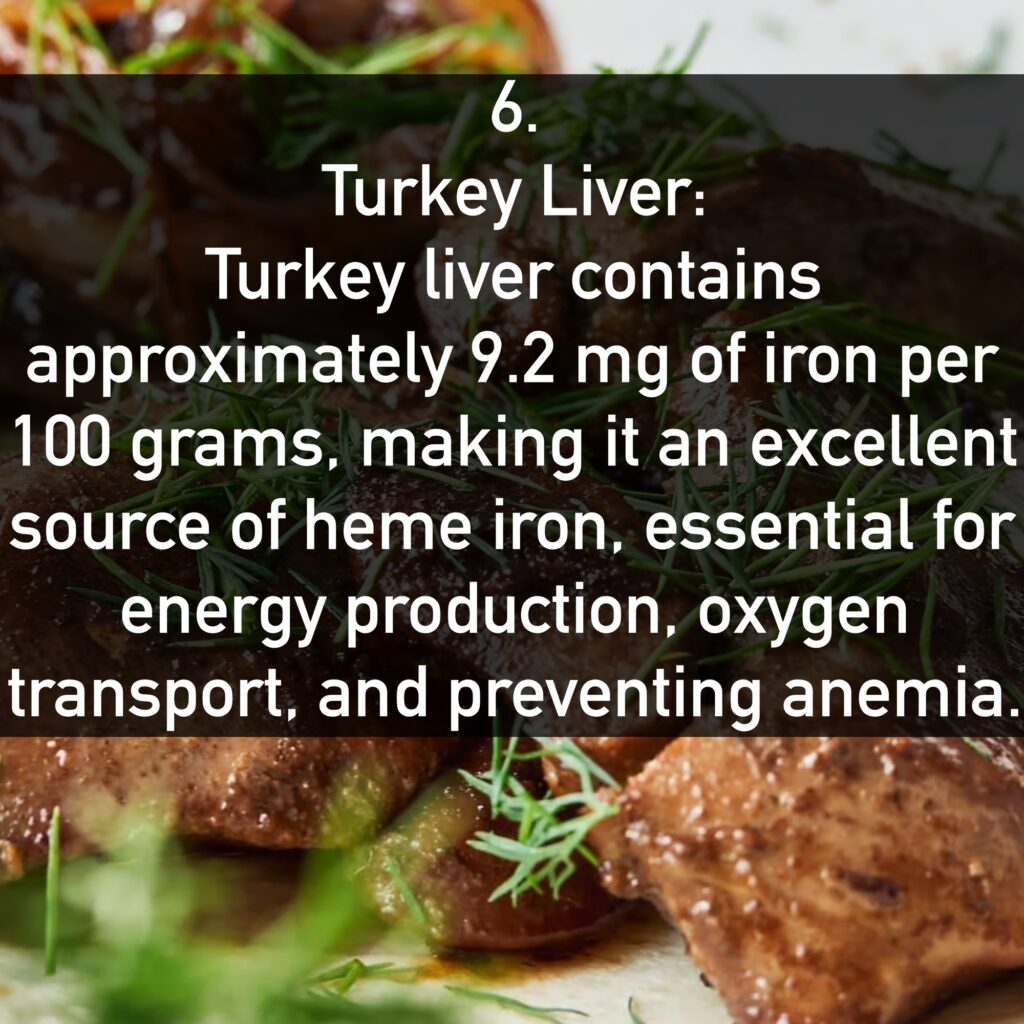
Turkey Liver: Turkey liver contains approximately 9.2 mg of iron per 100 grams, making it an excellent source of heme iron, essential for energy production, oxygen transport, and preventing anemia.

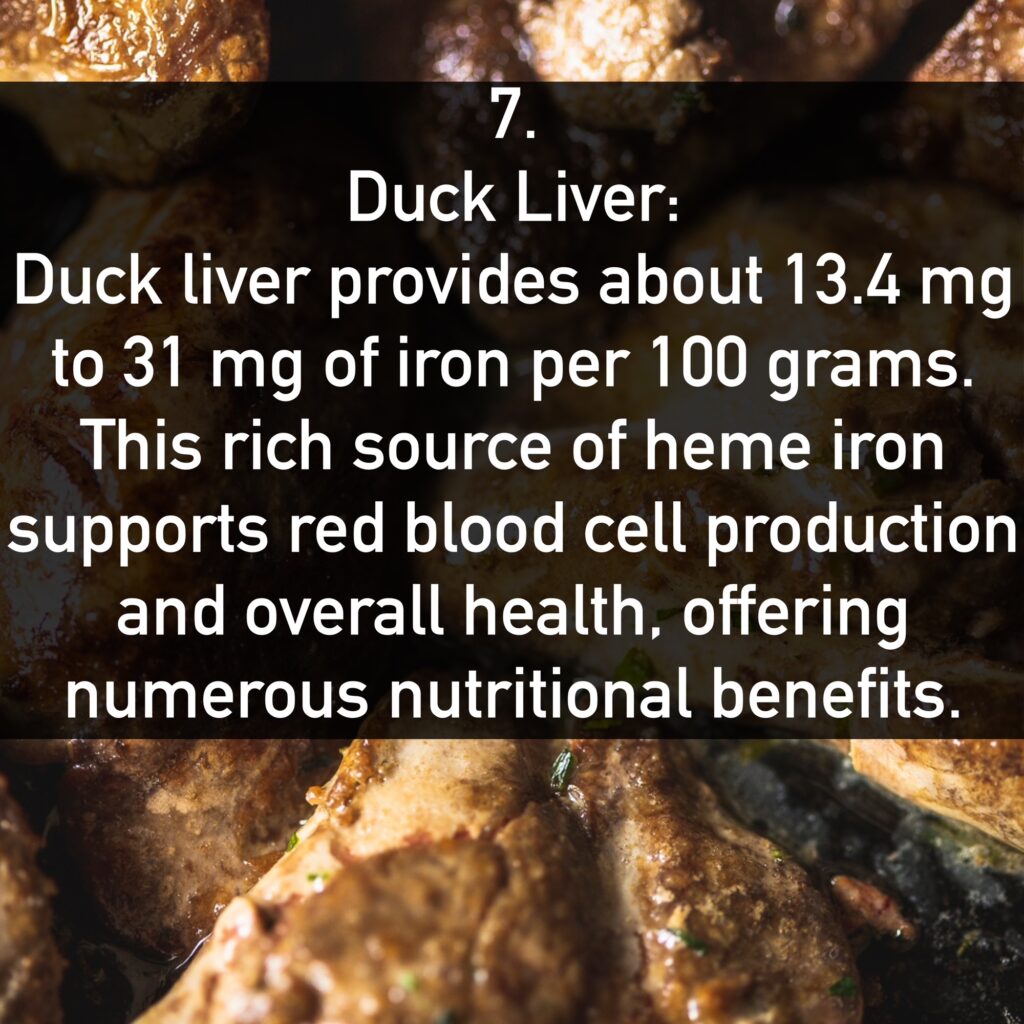
Duck Liver: Duck liver provides about 13.4 mg to 31 mg of iron per 100 grams. This rich source of heme iron supports red blood cell production and overall health, offering numerous nutritional benefits.

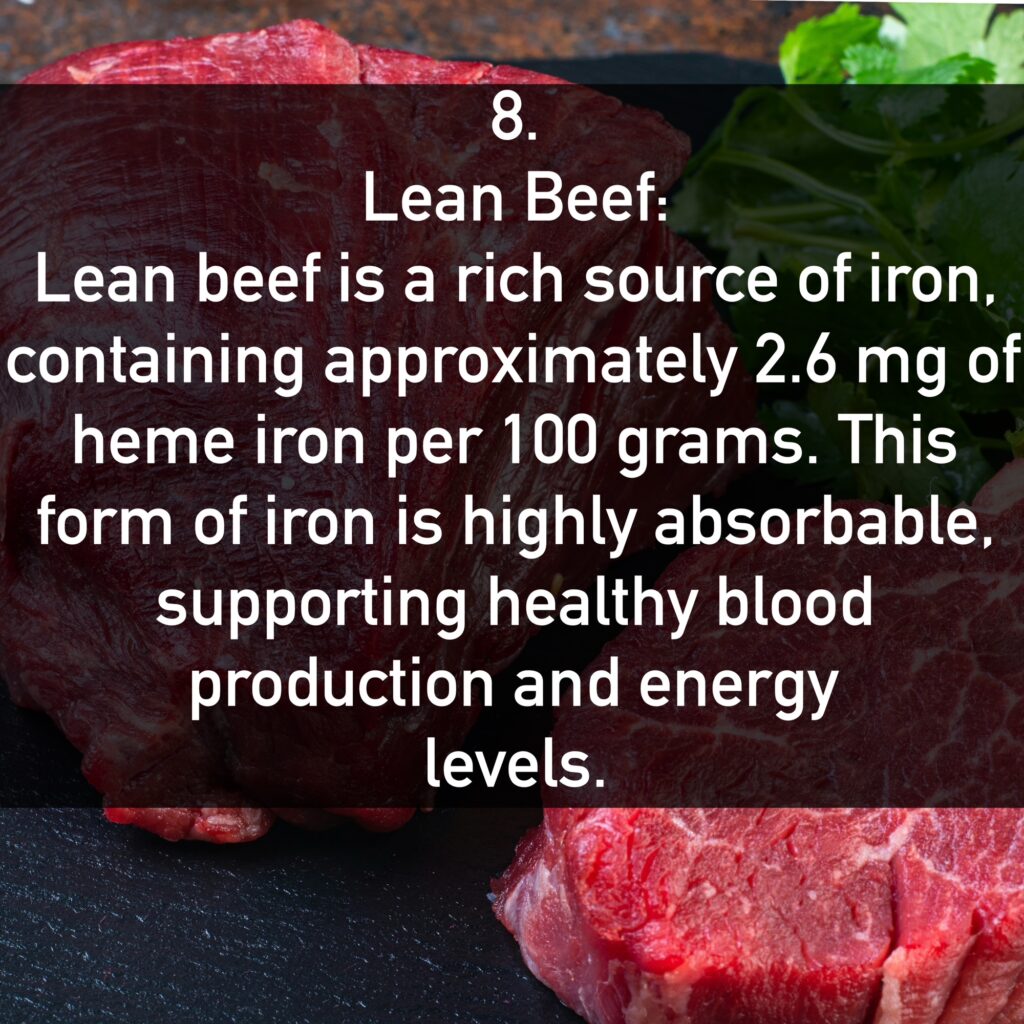
Lean Beef: Lean beef is a rich source of iron, containing approximately 2.6 mg of heme iron per 100 grams. This form of iron is highly absorbable, supporting healthy blood production and energy levels.

Lamb Liver (Grilled): Lamb liver is highly nutritious, containing approximately 11 mg of iron per 100 grams. This makes it an excellent source of heme iron, crucial for red blood cell production and overall

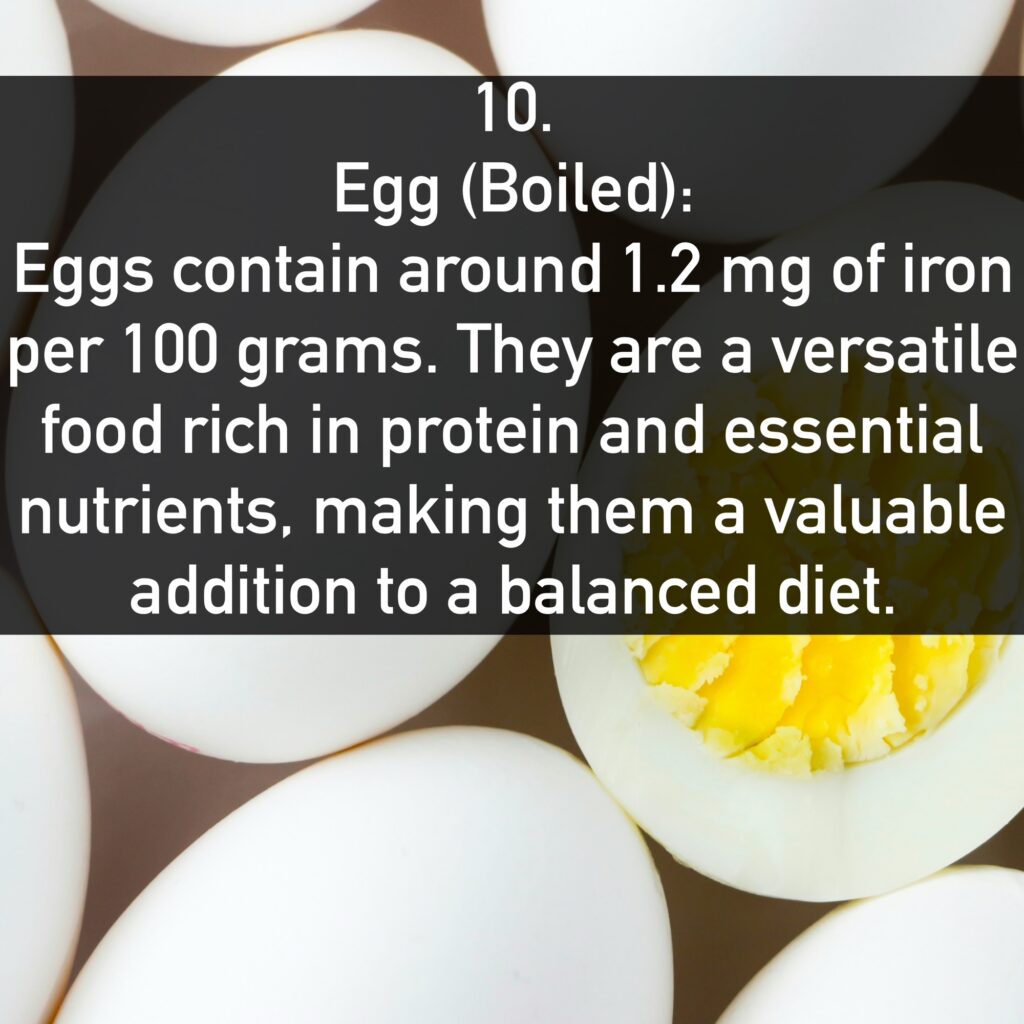
10. Egg (Boiled): Eggs contain around 1.2 mg of iron per 100 grams. They are a versatile food rich in protein and essential nutrients, making them a valuable addition to a balanced diet.

Non-Heme Iron Food Sources (Plant-Based) Non-heme iron is a type of iron found in plant-based foods and iron supplements. It is less efficiently absorbed by the body compared to heme iron found in animal products.

11. Sesame seeds: Sesame seeds are rich in iron, containing approximately 14.6 mg to 15 mg per 100 grams. This makes them a great dietary source for enhancing iron intake, contributing to improved overall health.

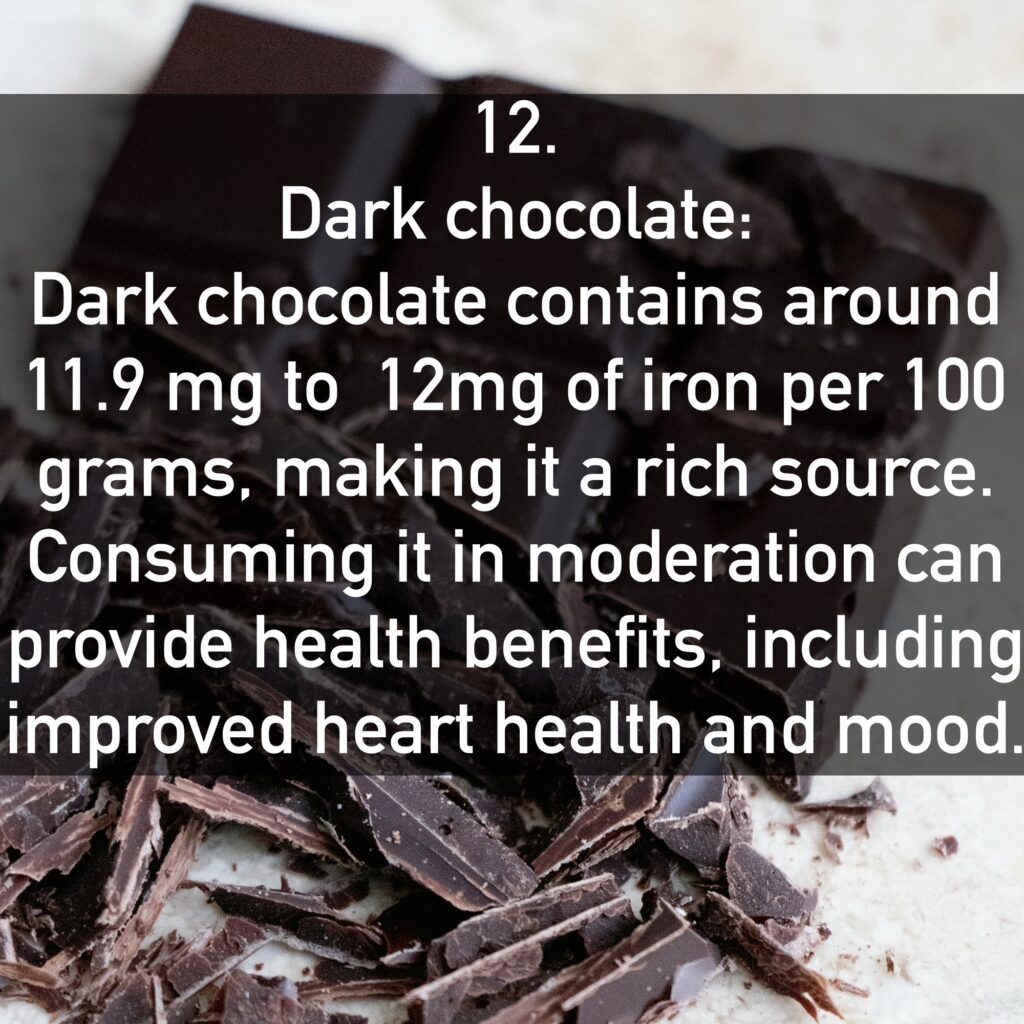
12. Dark chocolate: Dark chocolate contains around 11.9 mg to 12mg of iron per 100 grams, making it a rich source. Consuming it in moderation can provide health benefits, including improved heart health and mood.
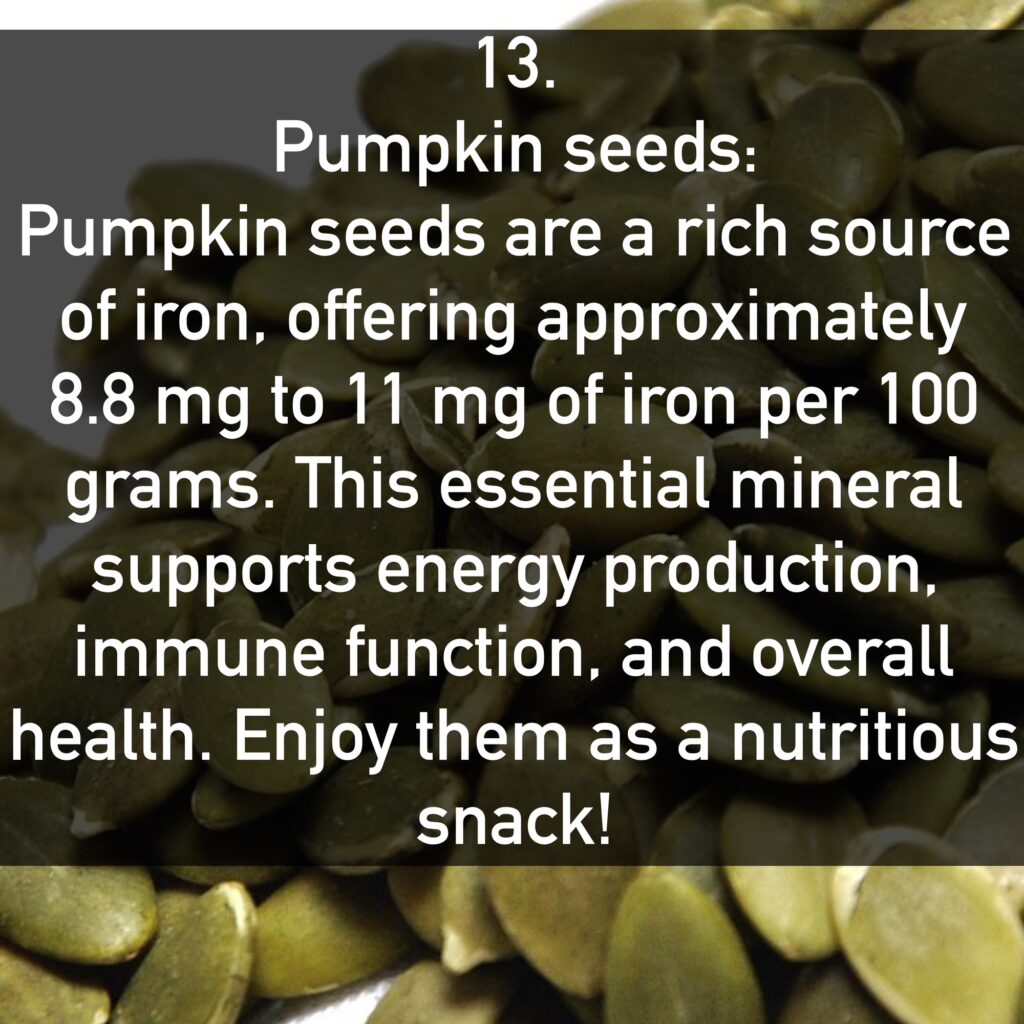
13. Pumpkin seeds: Pumpkin seeds are a rich source of iron, offering approximately 8.8 mg to 11 mg of iron per 100 grams. This essential mineral supports energy production, immune function, and overall health. Enjoy them as a nutritious snack!

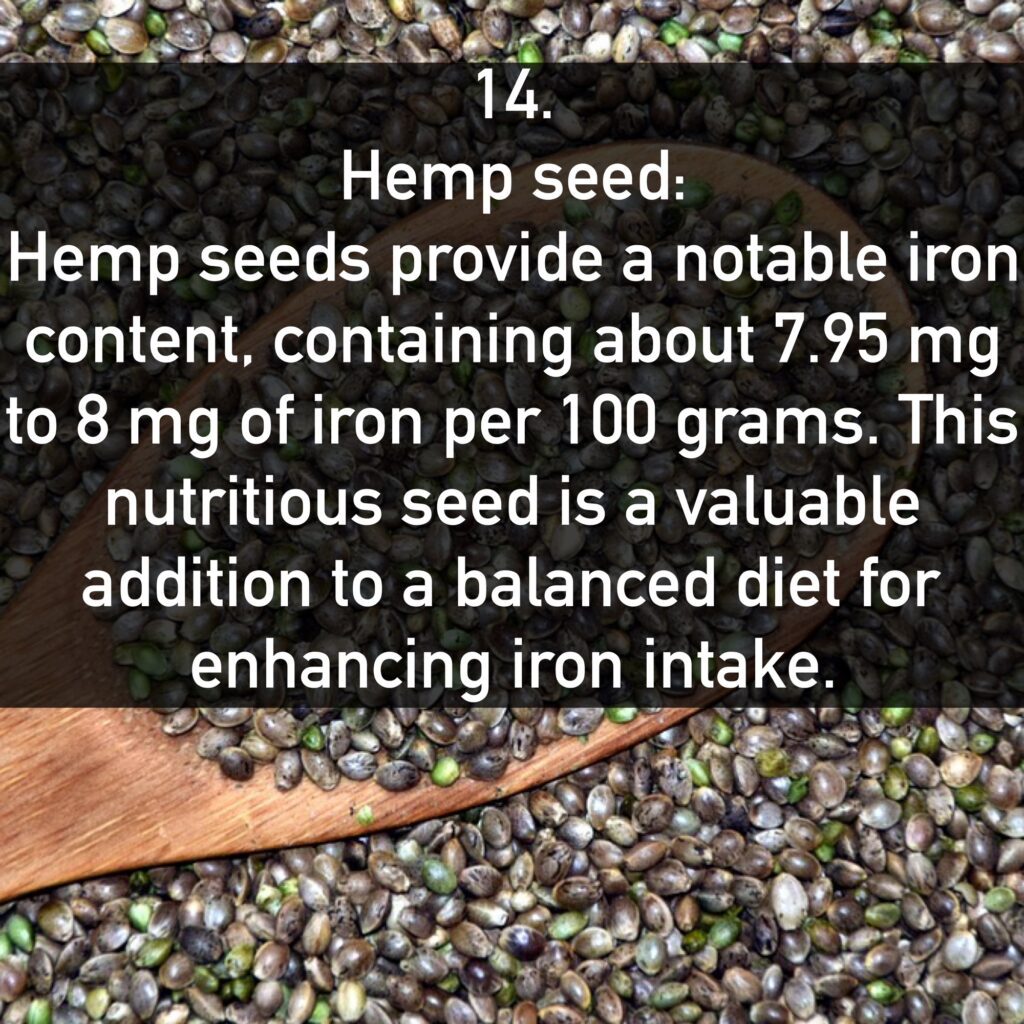
14. Hemp seed: Hemp seeds provide a notable iron content, containing about 7.95 mg to 8 mg of iron per 100 grams. This nutritious seed is a valuable addition to a balanced diet for enhancing iron intake.

15. Soy beans (Boiled): Boiled soybeans provide approximately 5.35 mg of iron per 100 grams. This makes them a nutritious option for enhancing iron intake, supporting anemia prevention, and promoting overall health.

16. Oatmeal: Oatmeal contains approximately 2.5 mg of iron per 100 grams. It serves as a good source of iron, alongside fiber and other essential nutrients, making it a nutritious breakfast option.

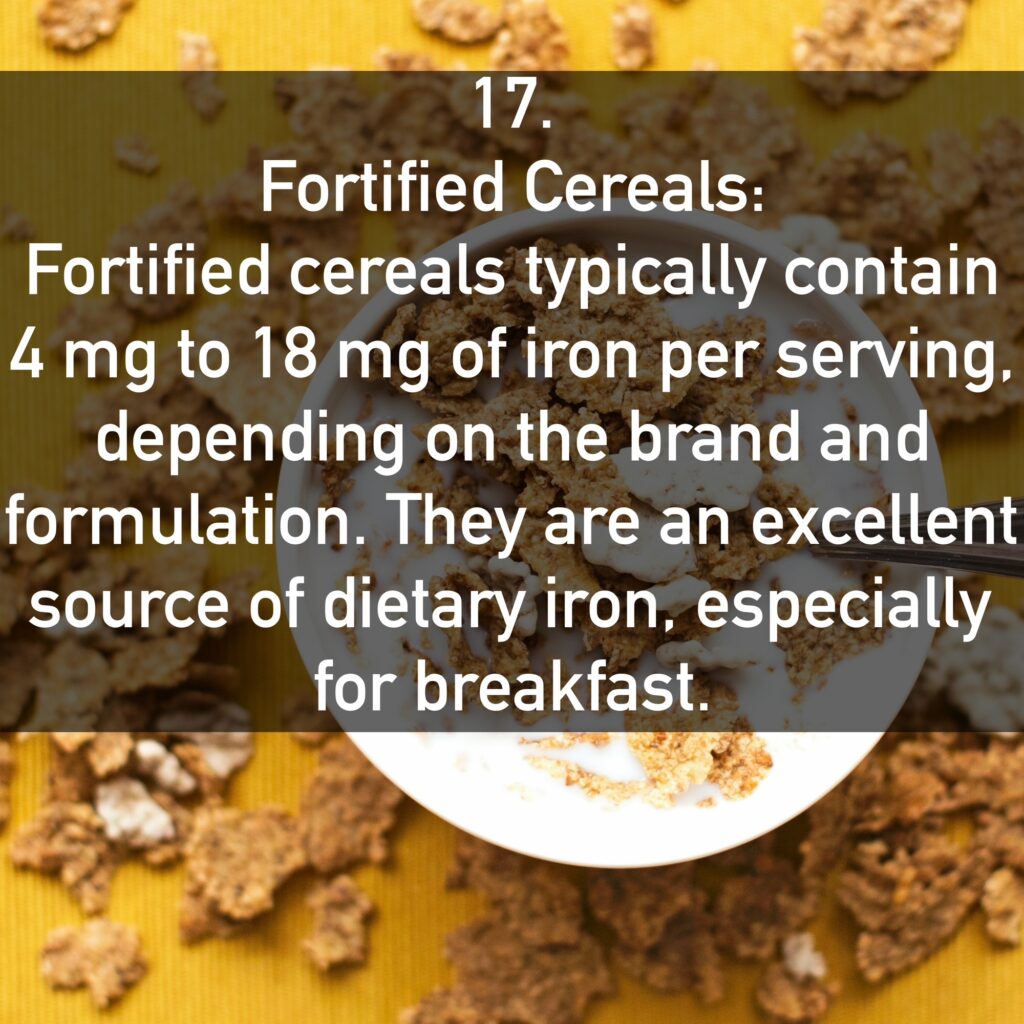
17. Fortified Cereals: Fortified cereals typically contain 4 mg to 18 mg of iron per serving. depending on the brand and formulation. They are an excellent source of dietary iron, especially for breakfast.

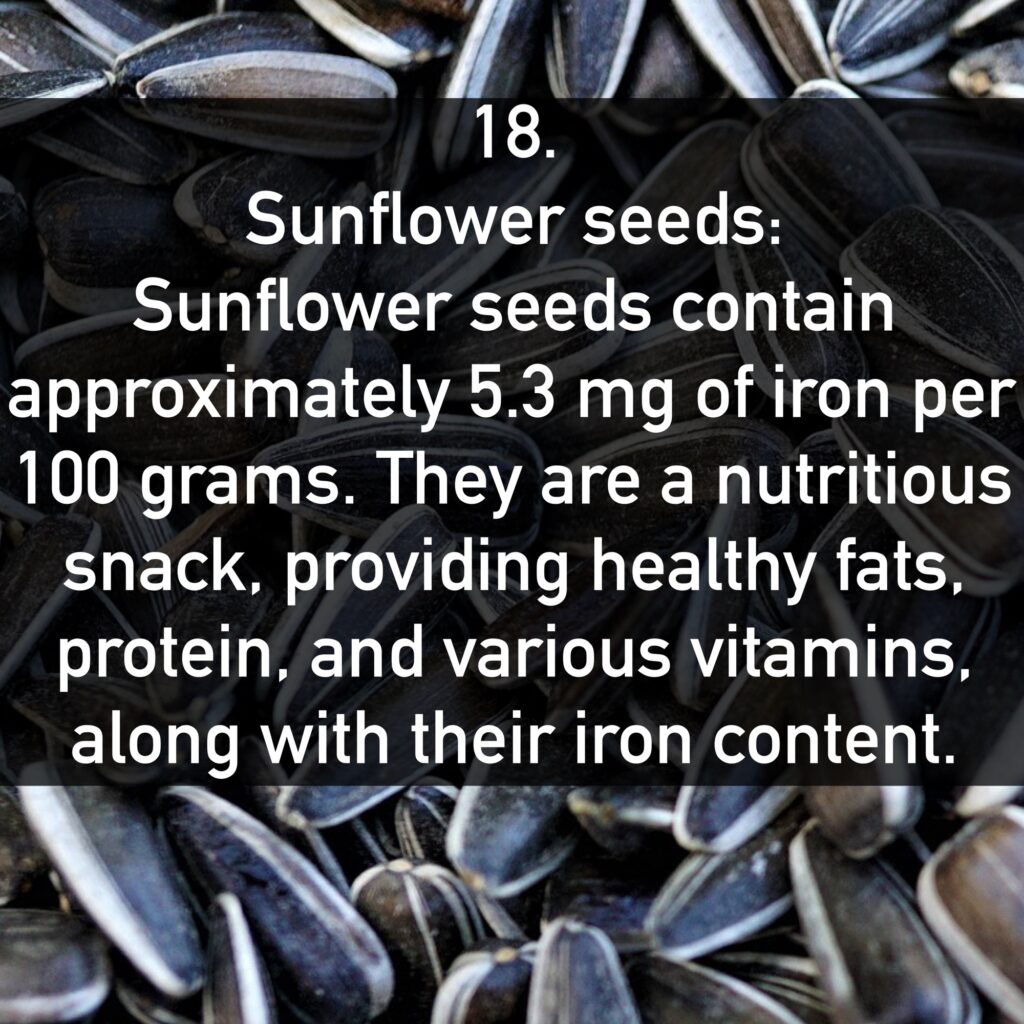
18. Sunflower seeds: Sunflower seeds contain approximately 5.3 mg of iron per 100 grams. They are a nutritious snack, providing healthy fats, protein, and various vitamins, along with their iron content.

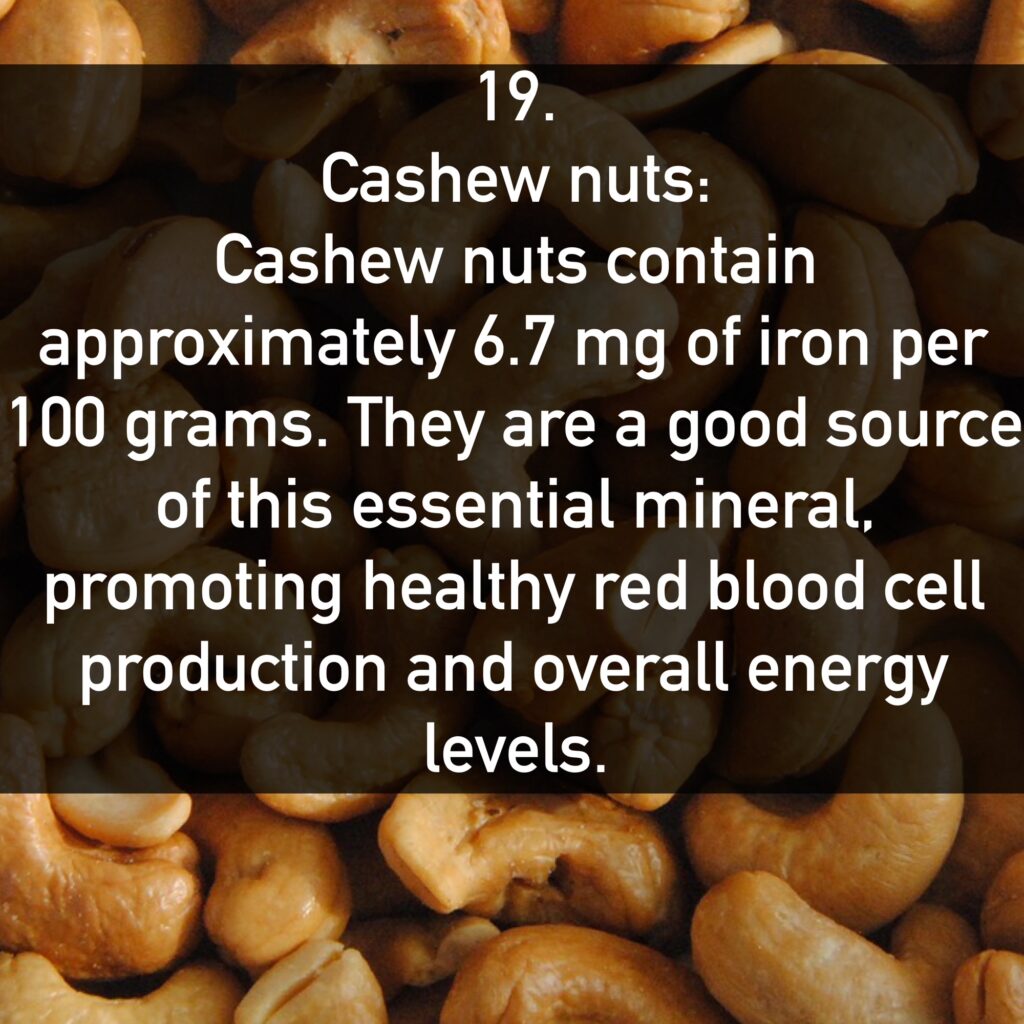
19. Cashew nuts: Cashew nuts contain approximately 6.7 mg of iron per 100 grams. They are a good source of this essential mineral, promoting healthy red blood cell production and overall energy levels.

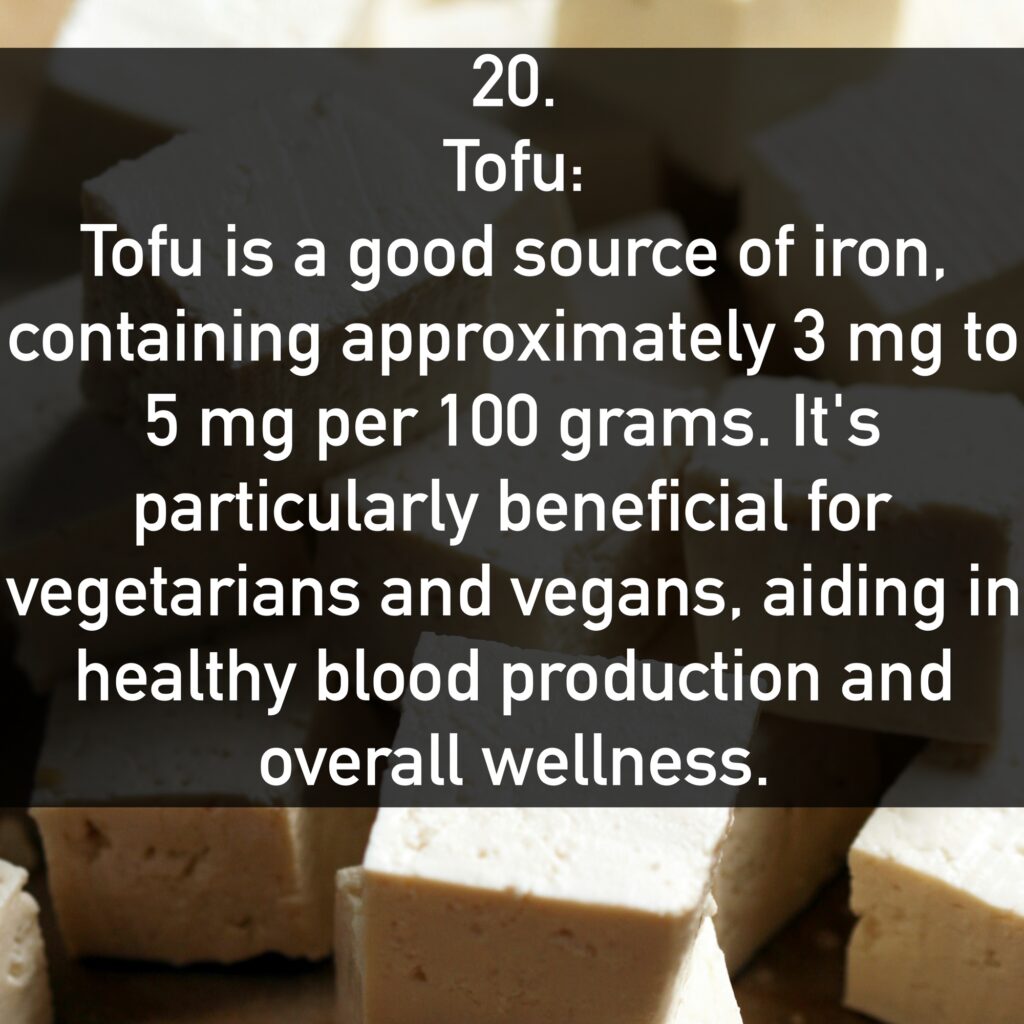
20. Tofu: Tofu is a good source of iron, containing approximately 3 mg to 5 mg per 100 grams. It's particularly beneficial for vegetarians and vegans, aiding in healthy blood production and overall wellness.

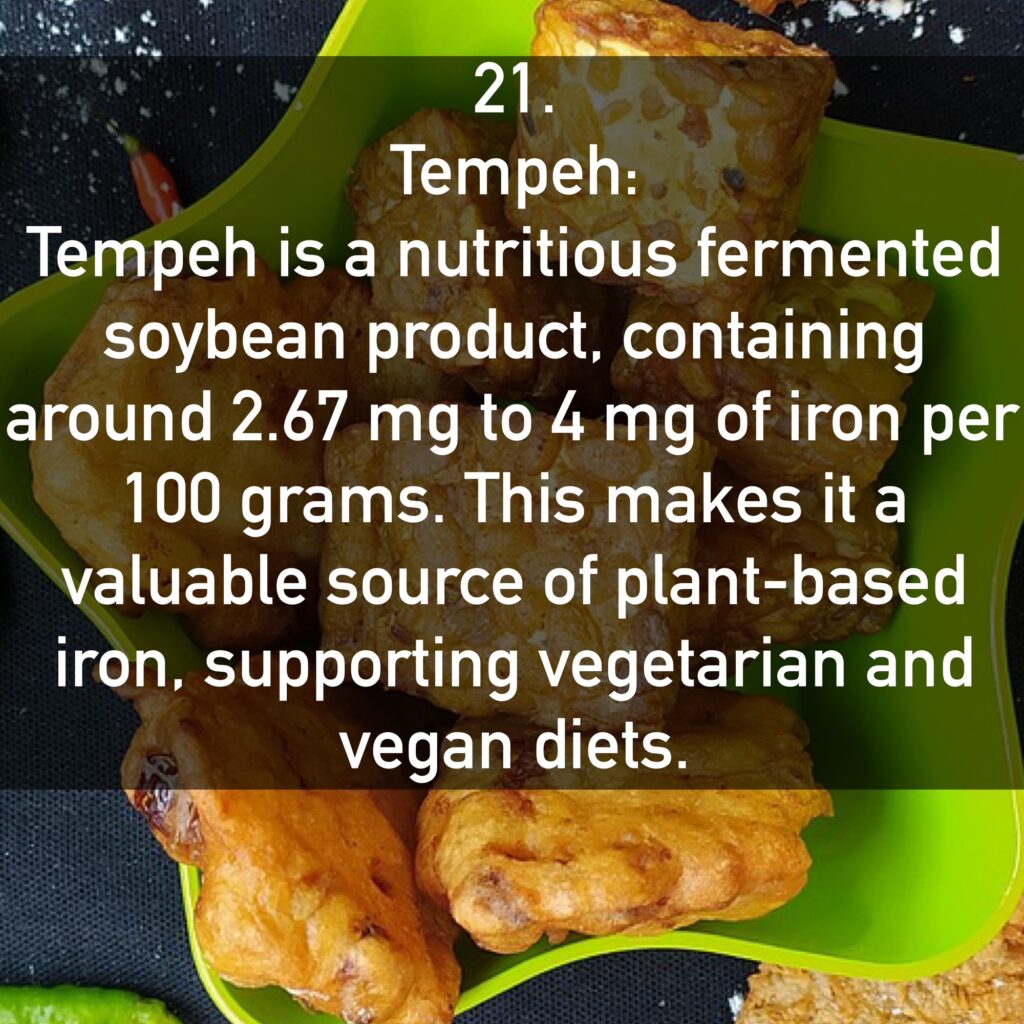
21. Tempeh: Tempeh is a nutritious fermented soybean product, containing around 2.67 mg to 4 mg of iron per 100 grams. This makes it a valuable source of plant-based iron, supporting vegetarian and vegan diets.

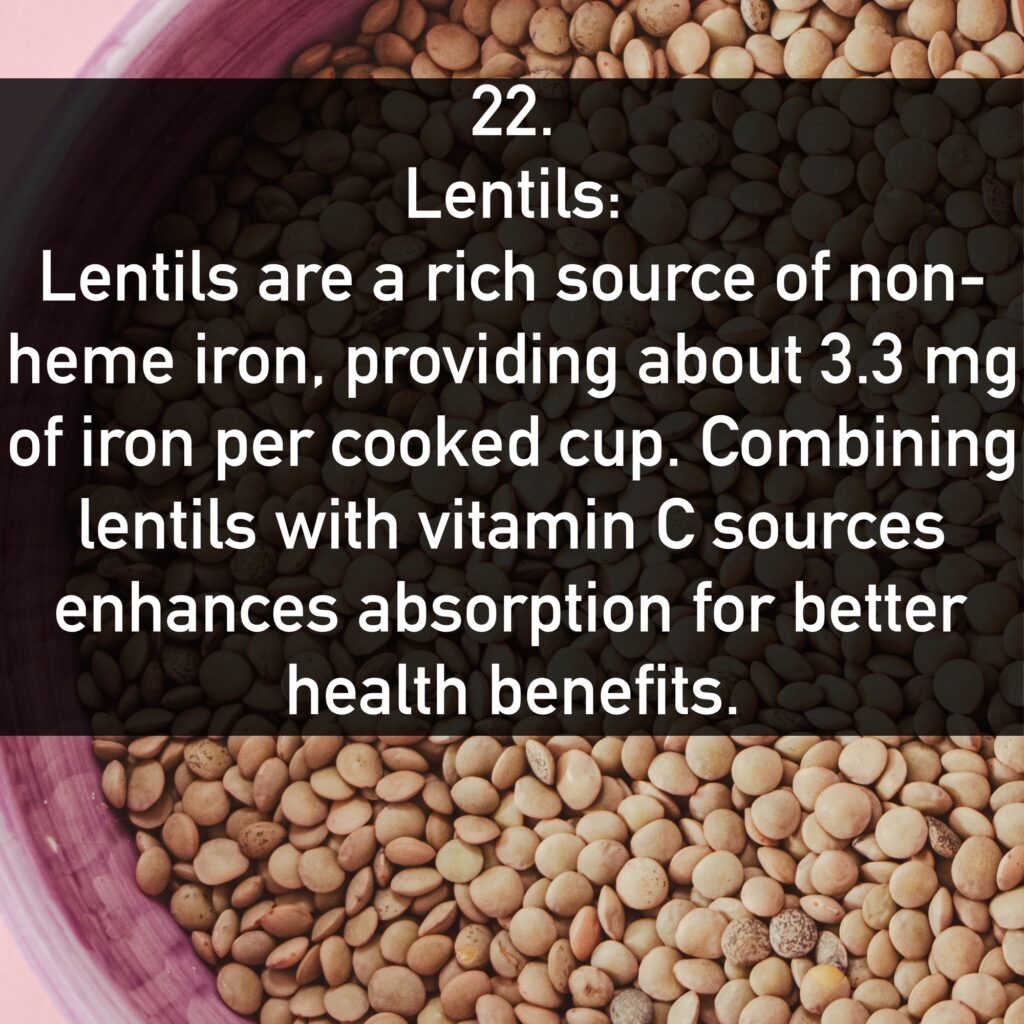
22. Lentils: Lentils are a rich source of non-heme iron, providing about 3.3 mg of iron per cooked cup. Combining lentils with vitamin C sources enhances absorption for better health benefits.

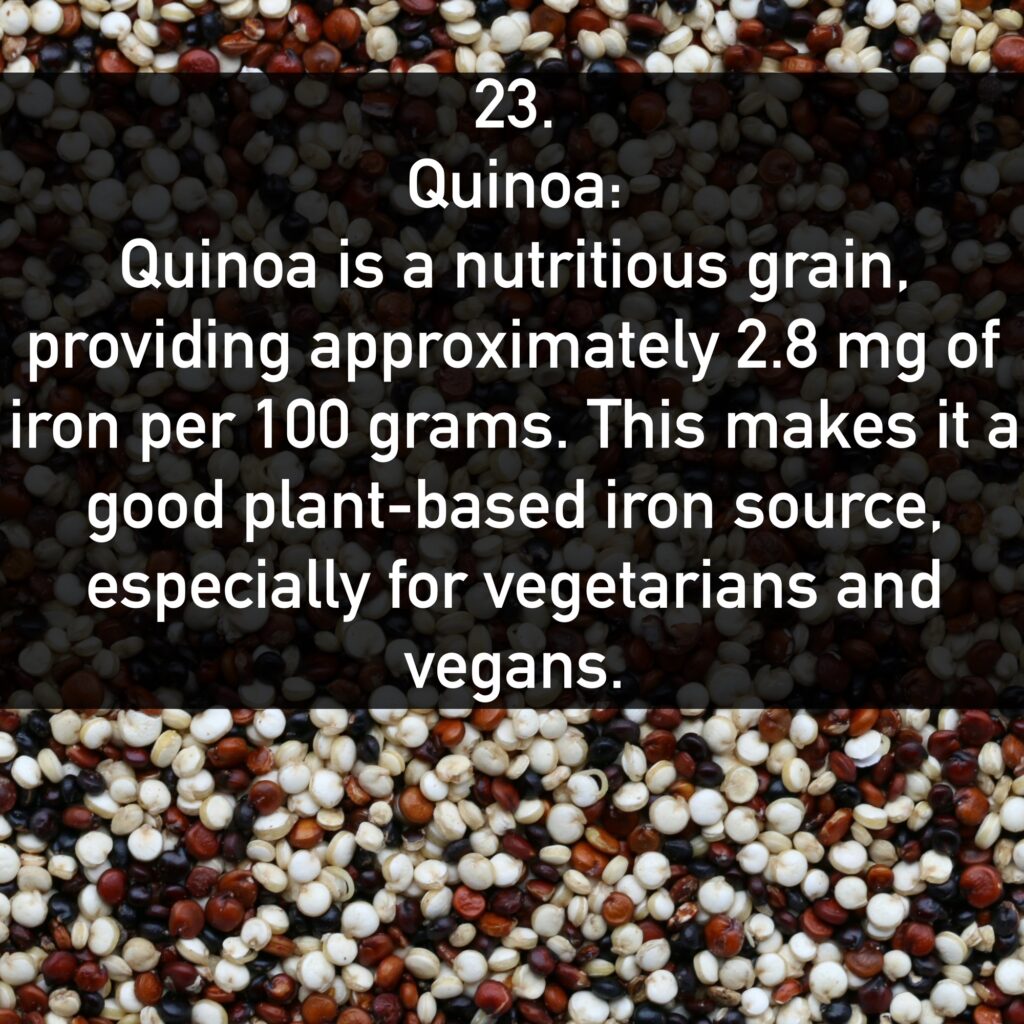
23. Quinoa: Quinoa is a nutritious grain, providing approximately 2.8 mg of iron per 100 grams. This makes it a good plant-based iron source, especially for vegetarians and vegans.

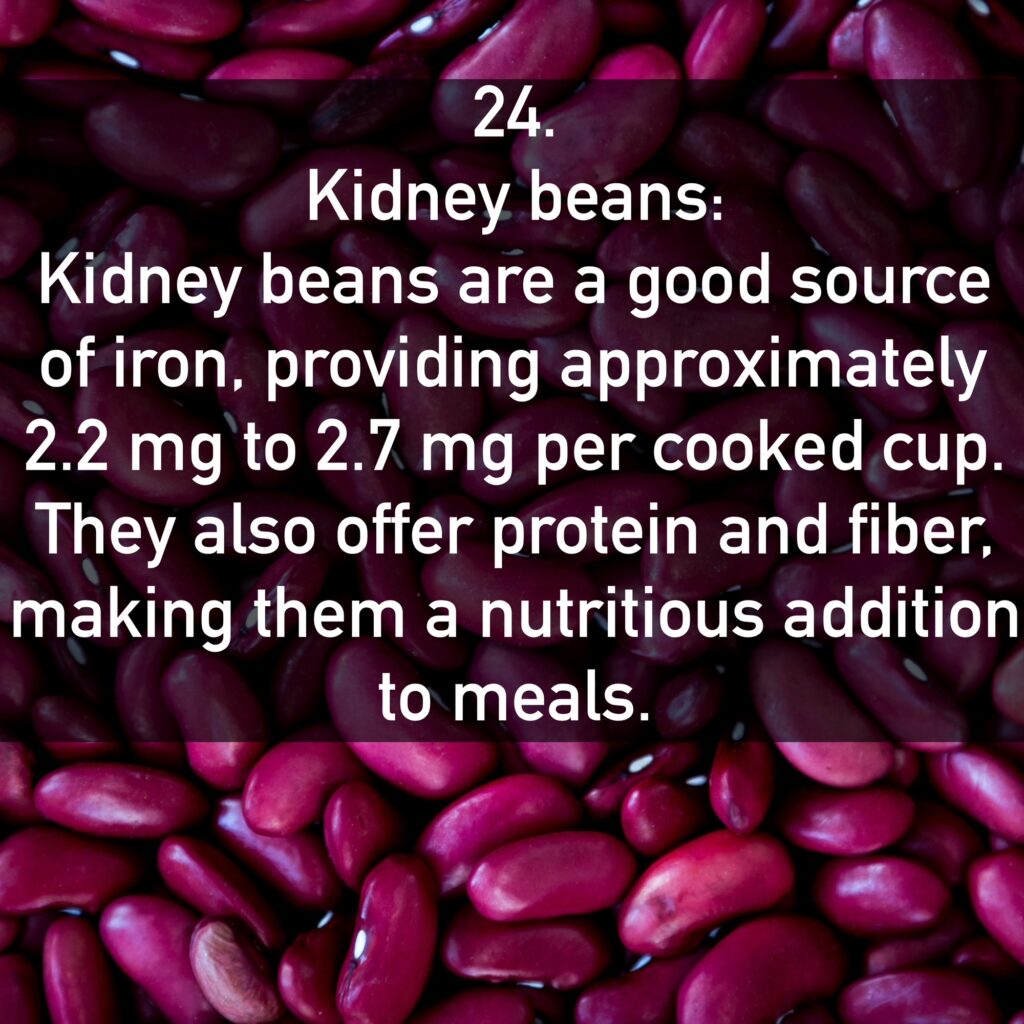
24. Kidney beans: Kidney beans are a good source of iron, providing approximately 2.2 mg to 2.7 mg per cooked cup. They also offer protein and fiber, making them a nutritious addition to meals.

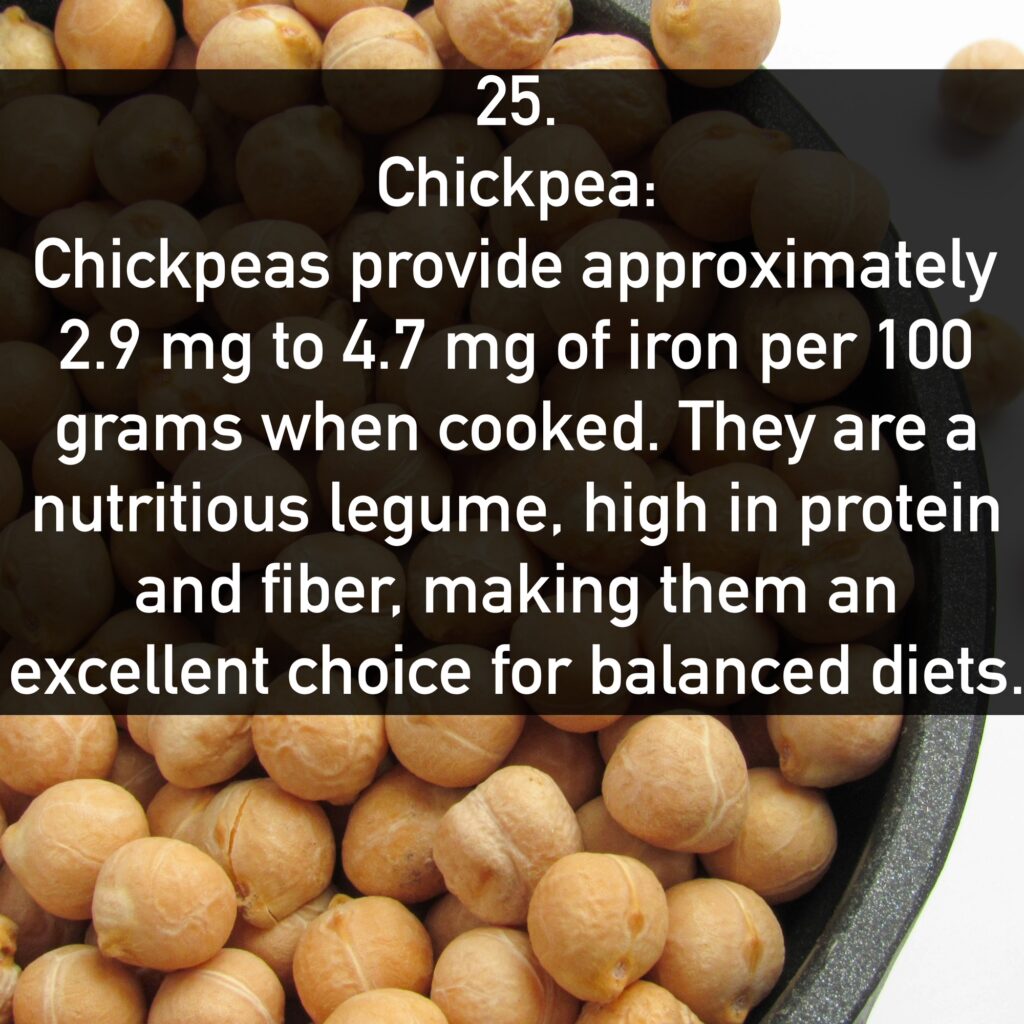
25. Chickpea: Chickpeas provide approximately 2.9 mg to 4.7 mg of iron per 100 grams when cooked. They are a nutritious legume, high in protein and fiber, making them an excellent choice for balanced diets.

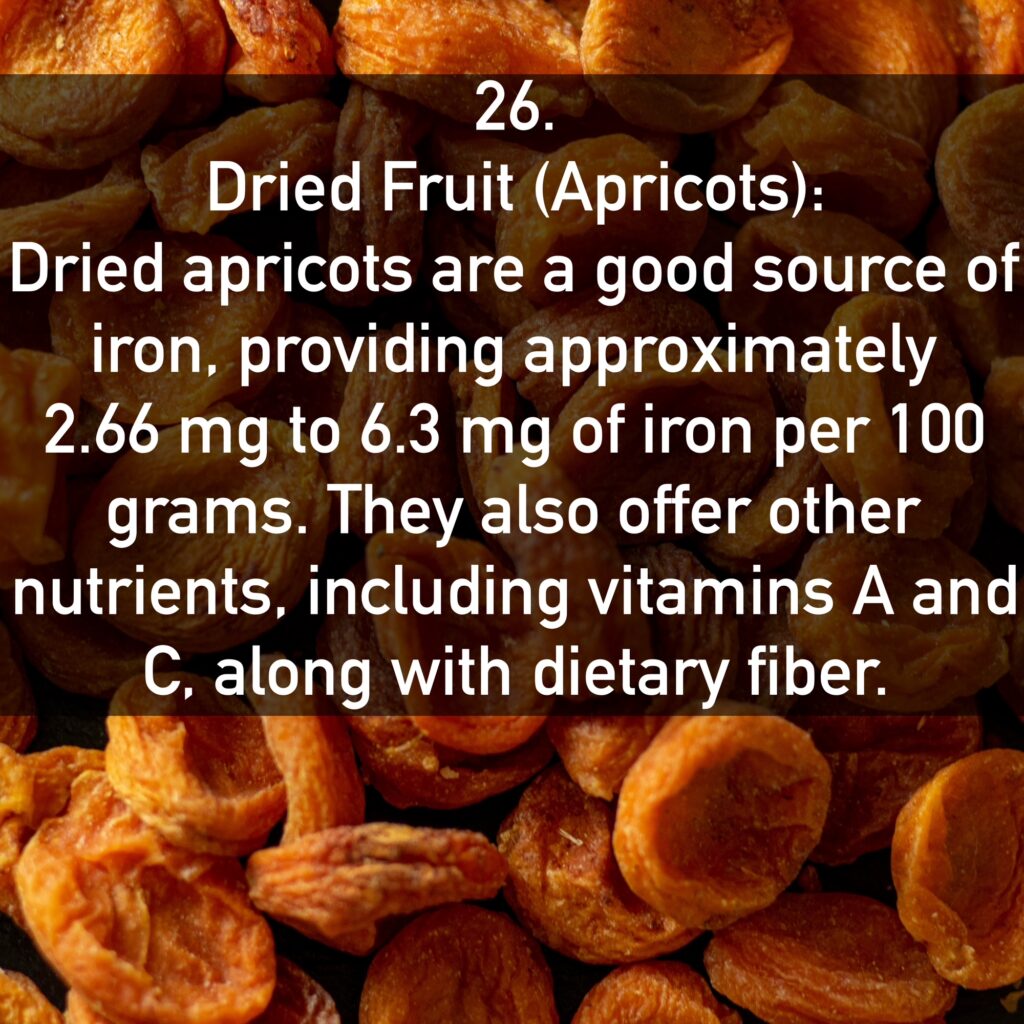
26. Dried Fruit (Apricots): Dried apricots are a good source of iron, providing approximately 2.66 mg to 6.3 mg of iron per 100 grams. They also offer other nutrients, including vitamins A and C. along with dietary fiber.

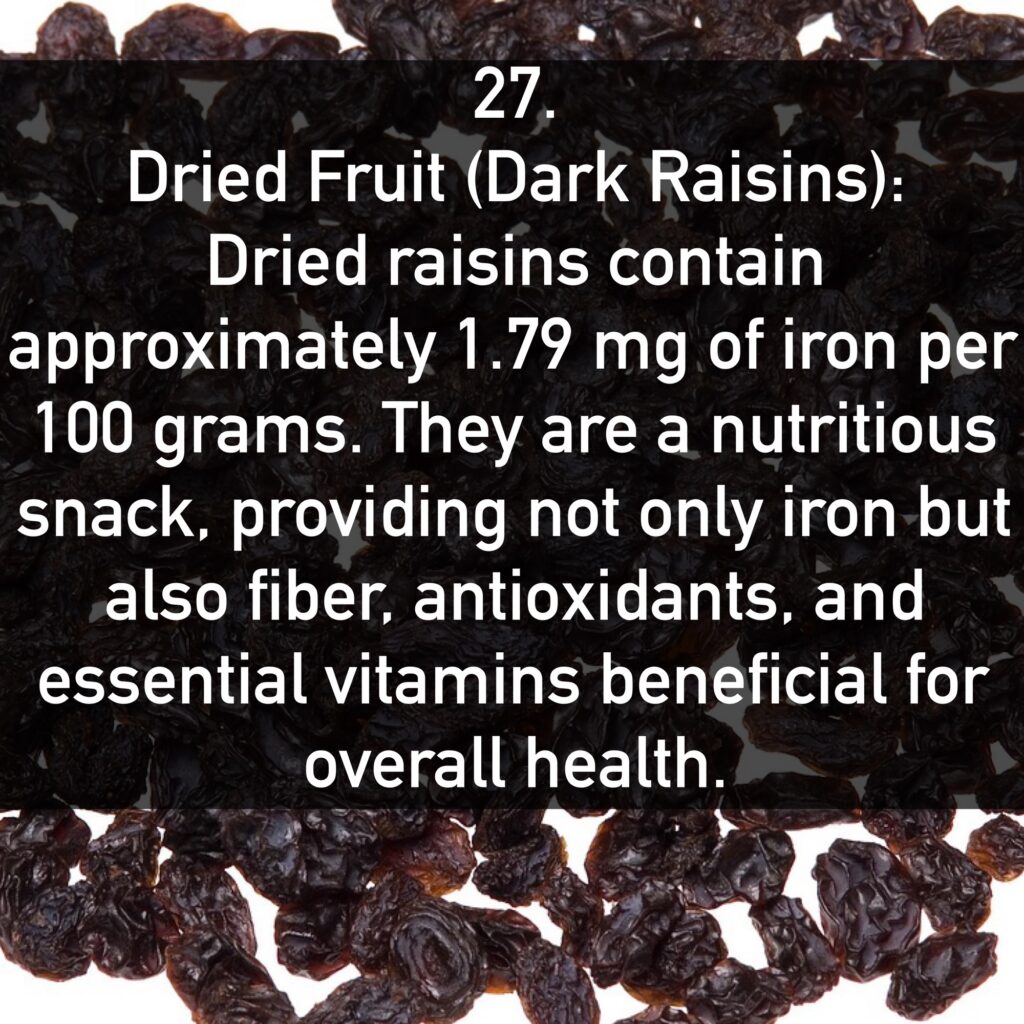
27. Dried Fruit (Dark Raisins): Dried raisins contain approximately 1.79 mg of iron per 100 grams. They are a nutritious snack, providing not only iron but also fiber, antioxidants, and essential vitamins beneficial for overall health.

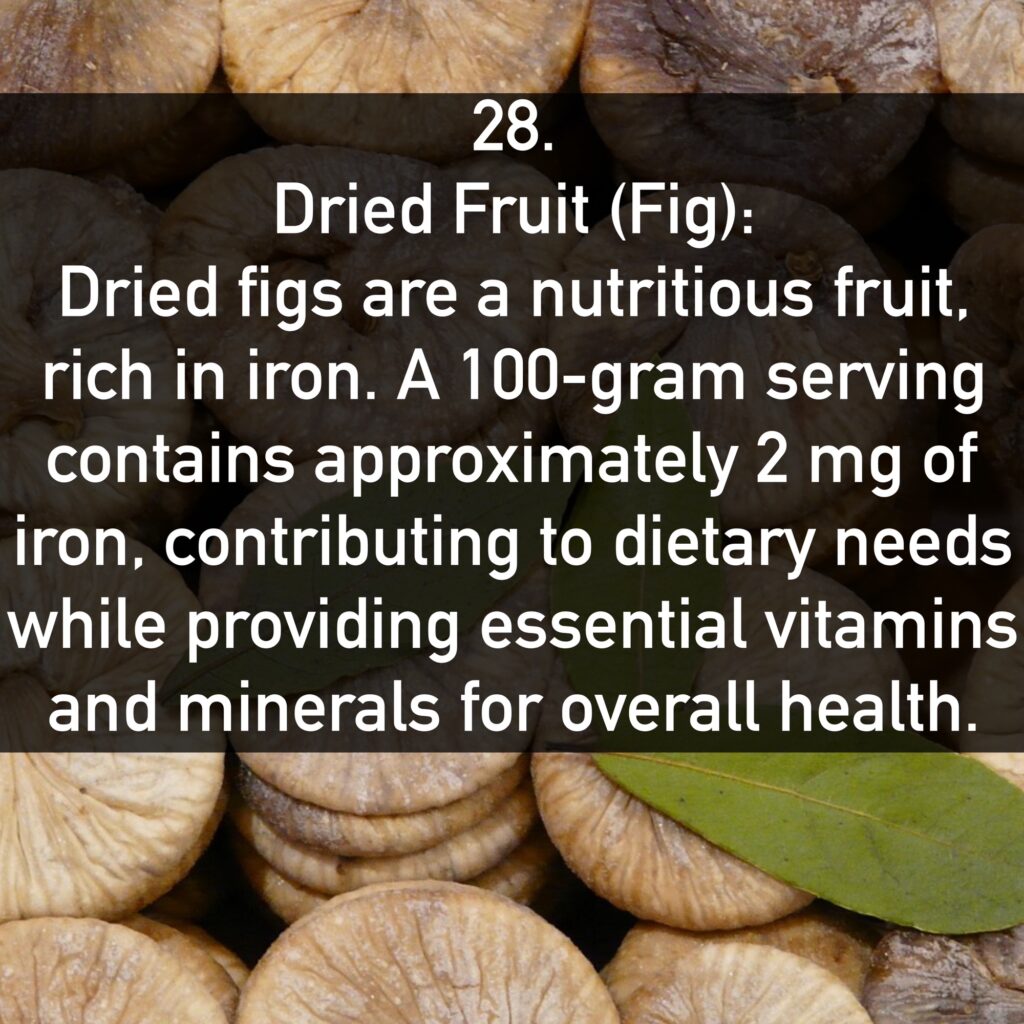
28. Dried Fruit (Fig): Dried figs are a nutritious fruit, rich in iron. A 100-gram serving contains approximately 2 mg of iron, contributing to dietary needs while providing essential vitamins and minerals for overall health.

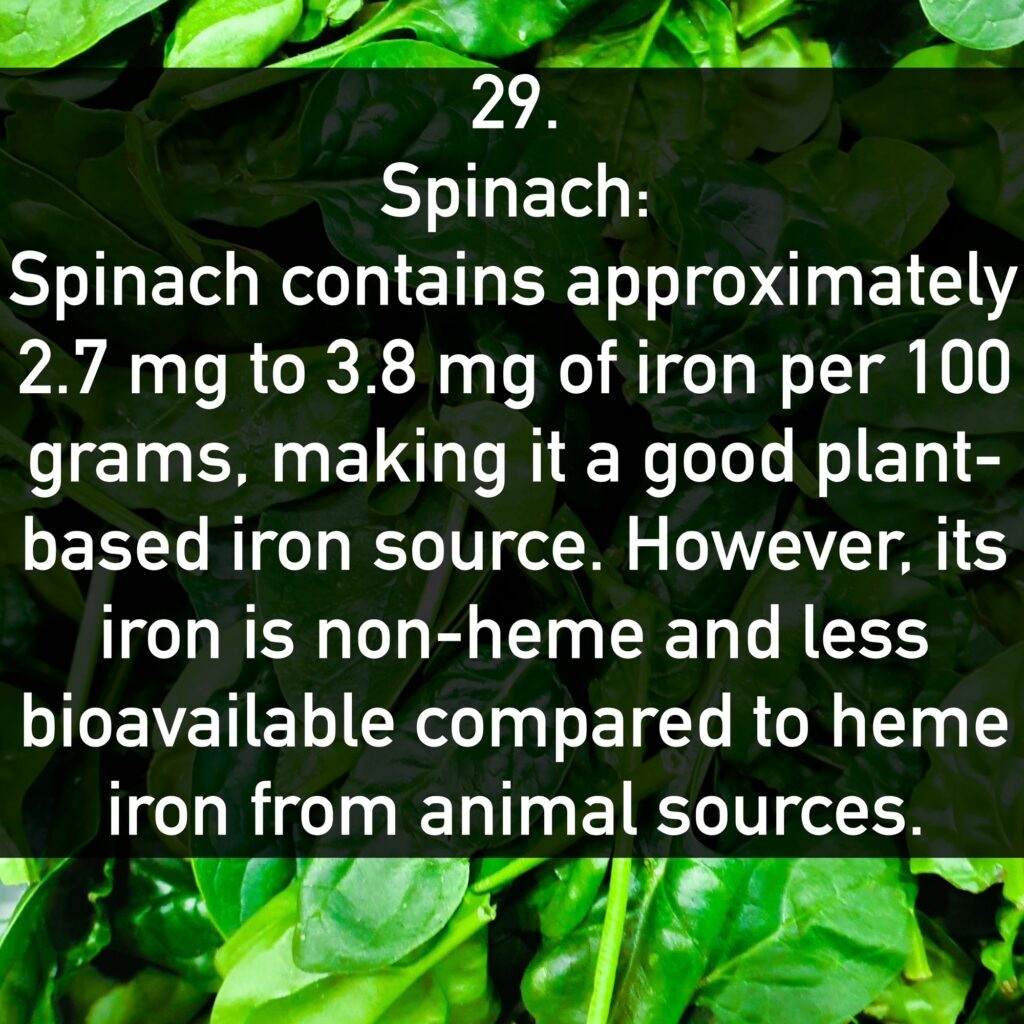
29. Spinach: Spinach contains approximately 2.7 mg to 3.8 mg of iron per 100 grams, making it a good plant-based iron source. However, its iron is non-heme and less bioavailable compared to heme iron from animal sources.

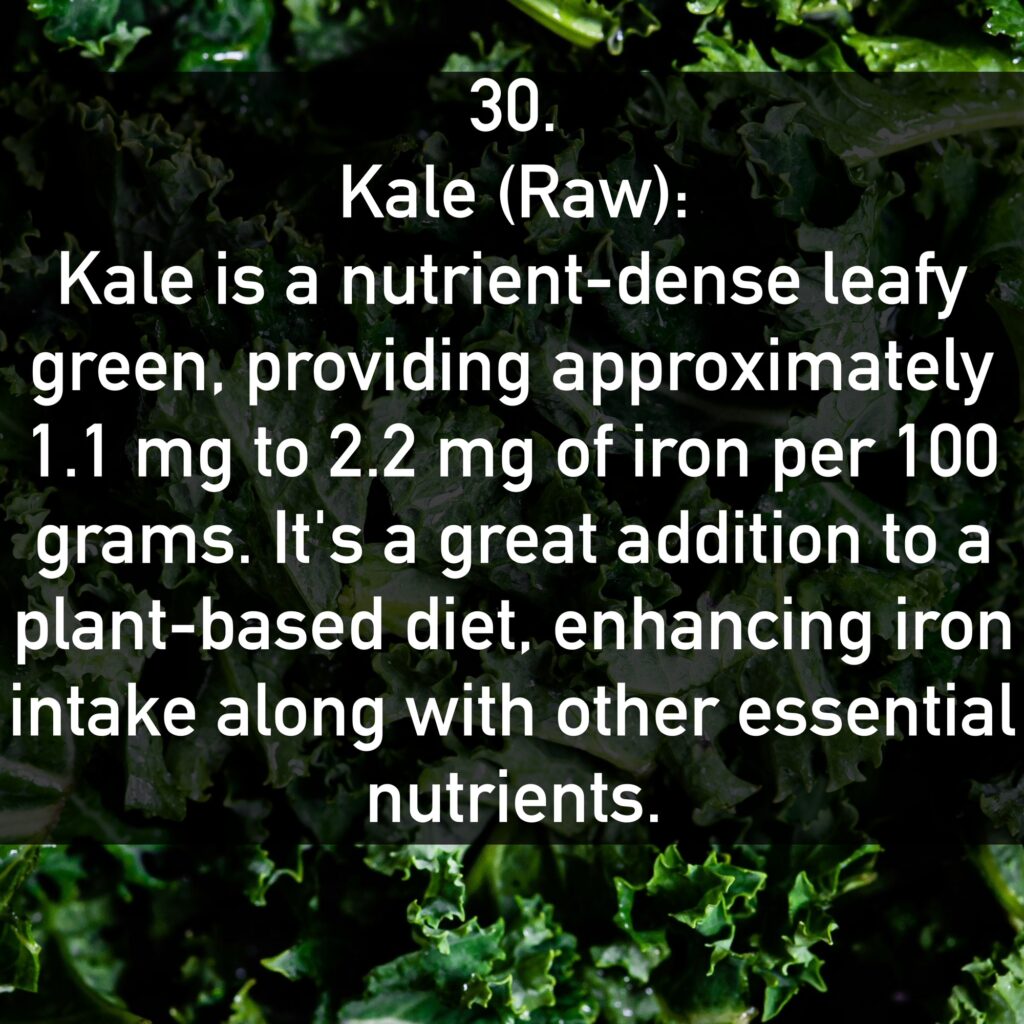
30. Kale (Raw): Kale is a nutrient-dense leafy green, providing approximately 1.1 mg to 2.2 mg of iron per 100 grams. It's a great addition to a plant-based diet, enhancing iron intake along with other essential nutrients.

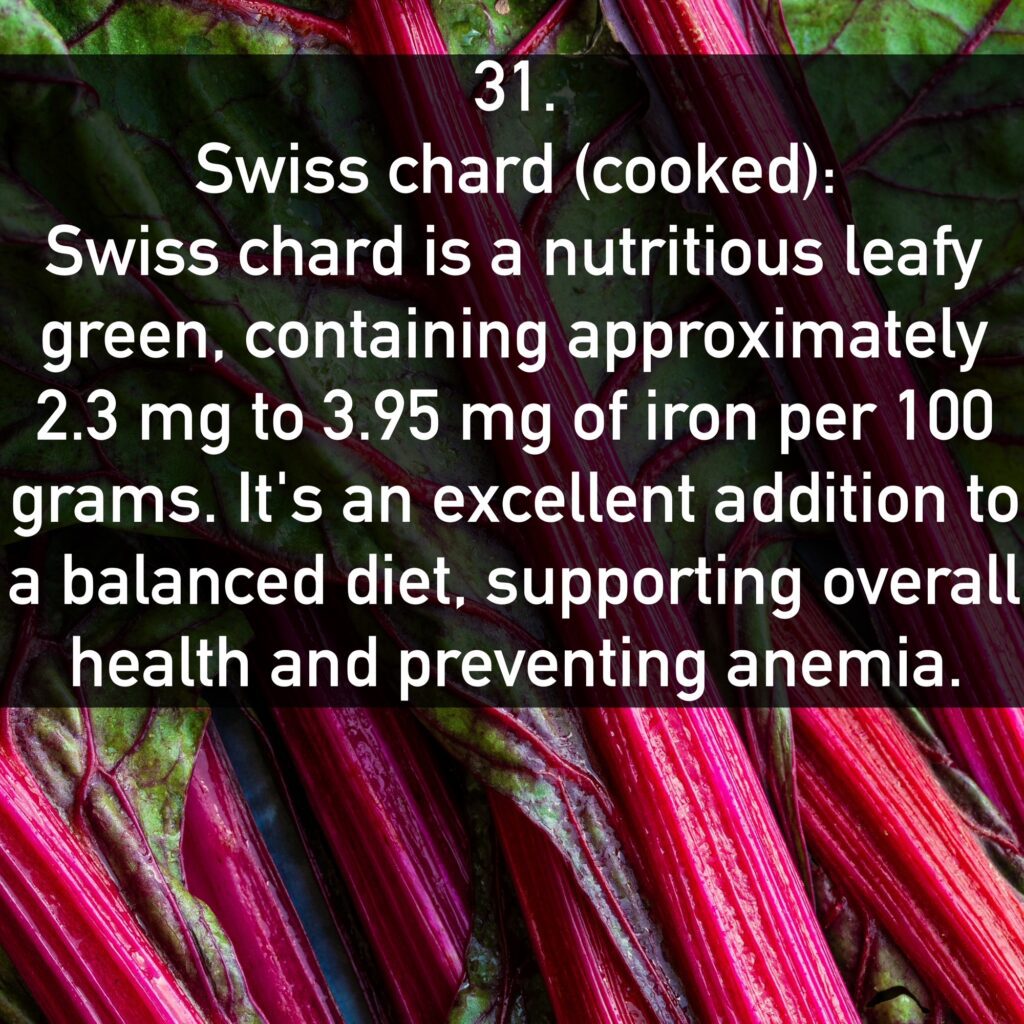
31. Swiss chard (cooked): Swiss chard is a nutritious leafy green, containing approximately 2.3 mg to 3.95 mg of iron per 100 grams. It's an excellent addition to a balanced diet, supporting overall health and preventing anemia.

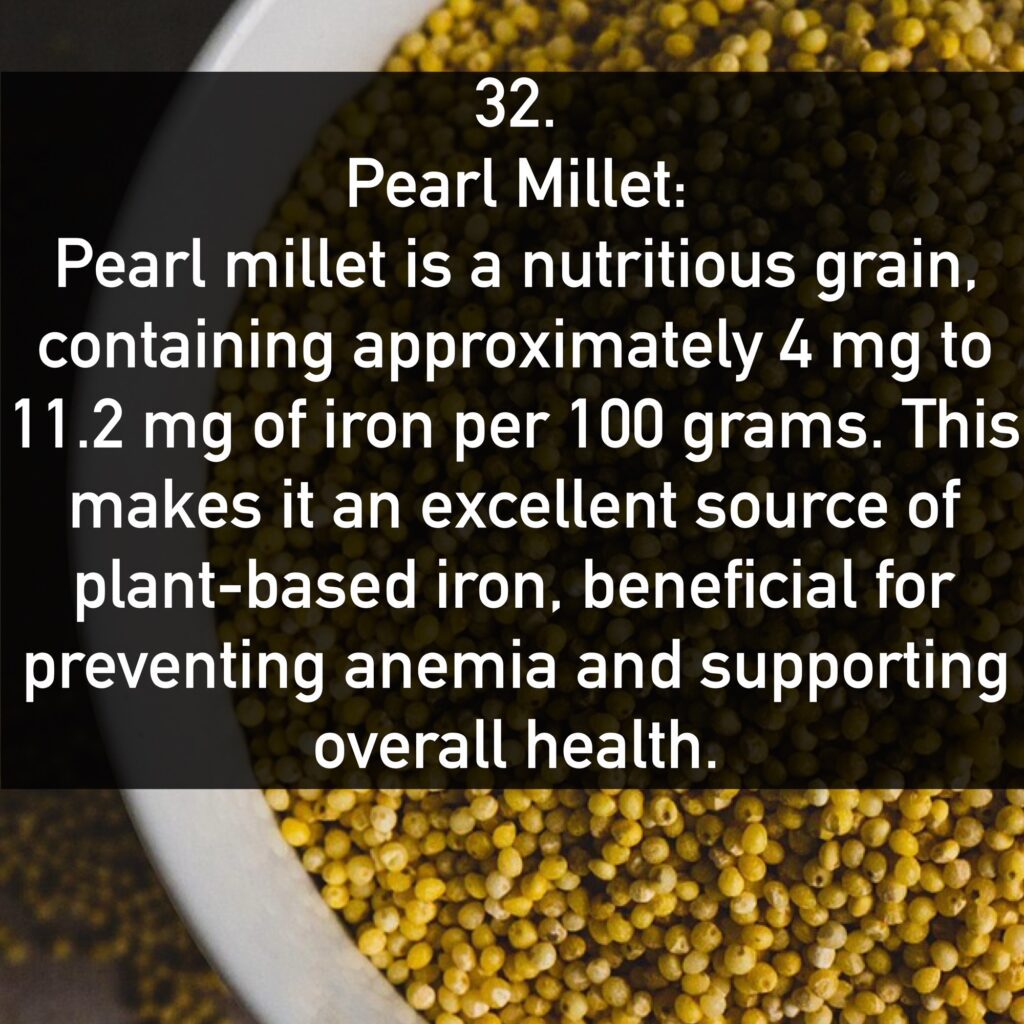
32. Pearl Millet: Pearl millet is a nutritious grain, containing approximately 4 mg to 11.2 mg of iron per 100 grams. This makes it an excellent source of plant-based iron, beneficial for preventing anemia and supporting overall health.

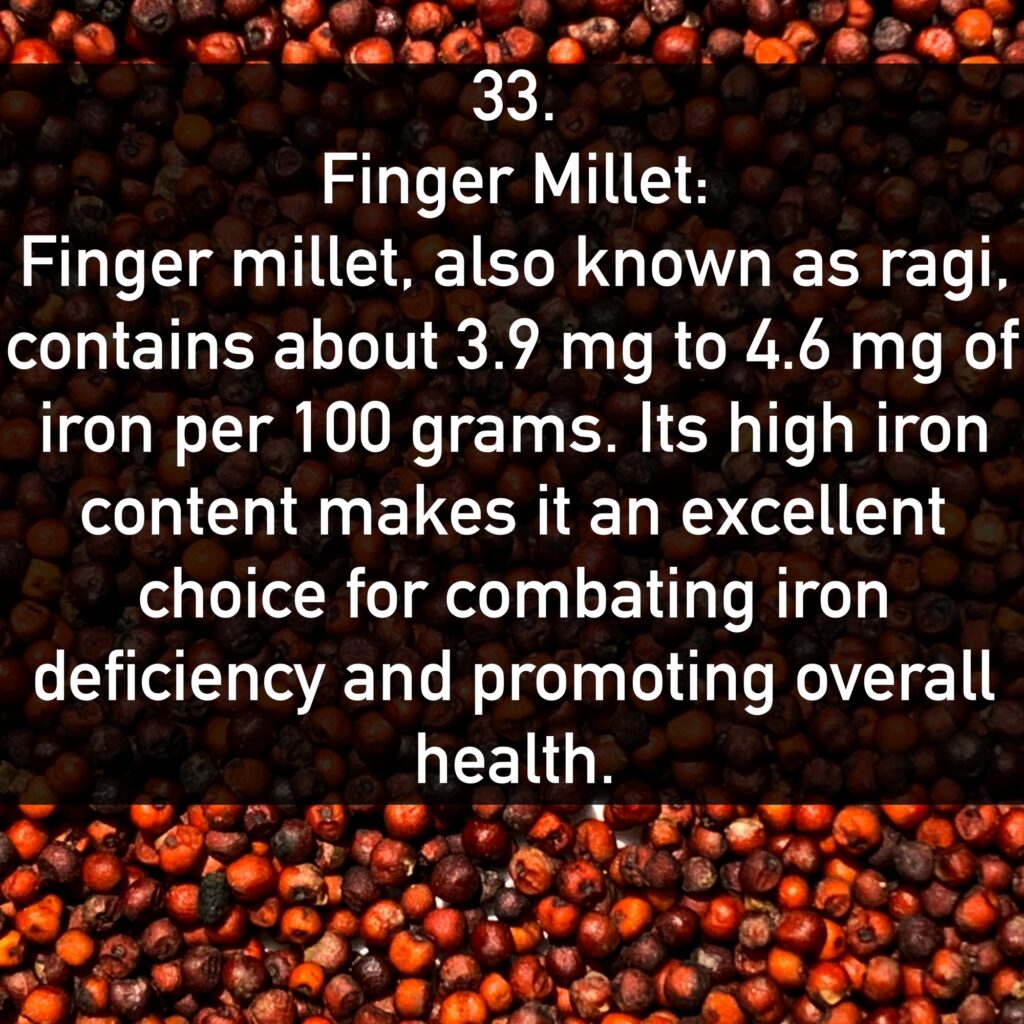
33. Finger Millet: Finger millet, also known as ragi, contains about 3.9 mg to 4.6 mg of iron per 100 grams. Its high iron content makes it an excellent choice for combating iron deficiency and promoting overall health.

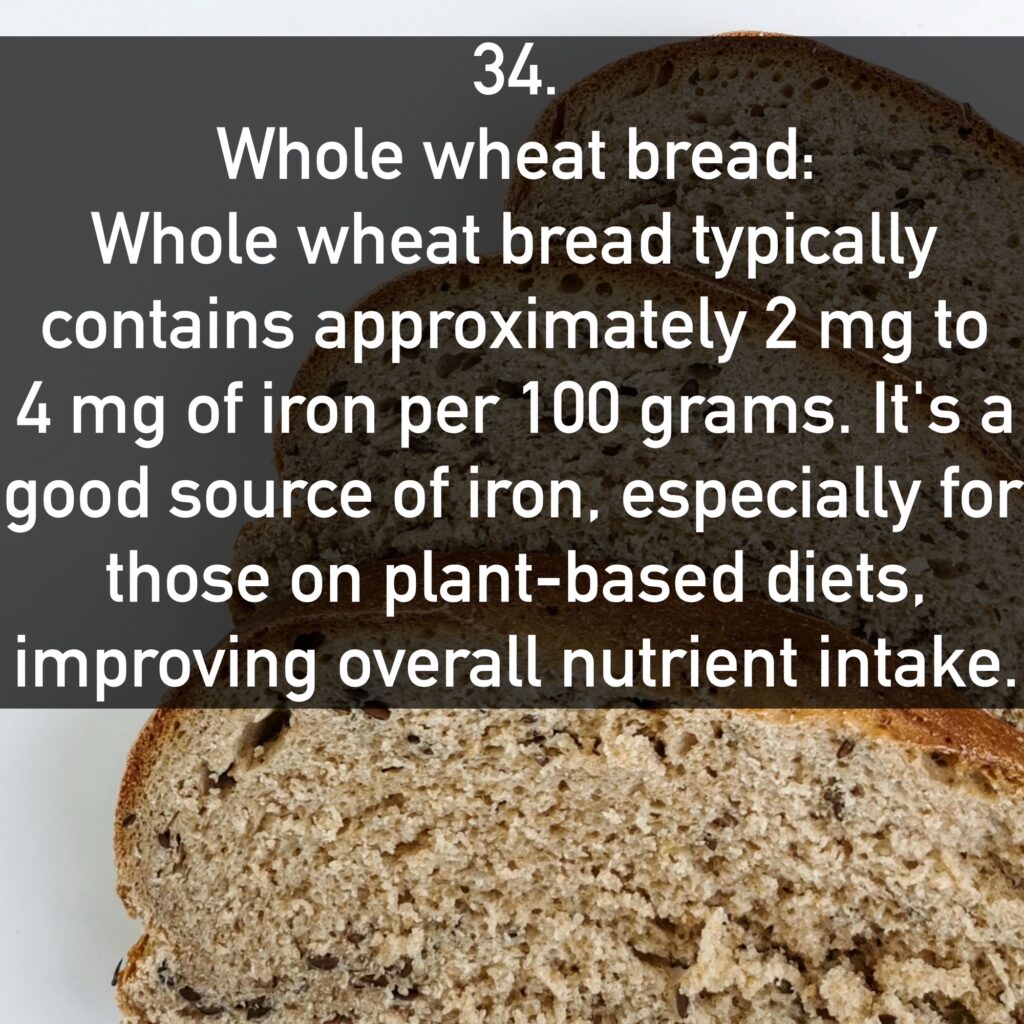
34. Whole wheat bread: Whole wheat bread typically contains approximately 2 mg to 4 mg of iron per 100 grams. It's a good source of iron, especially for those on plant-based diets, improving overall nutrient intake.

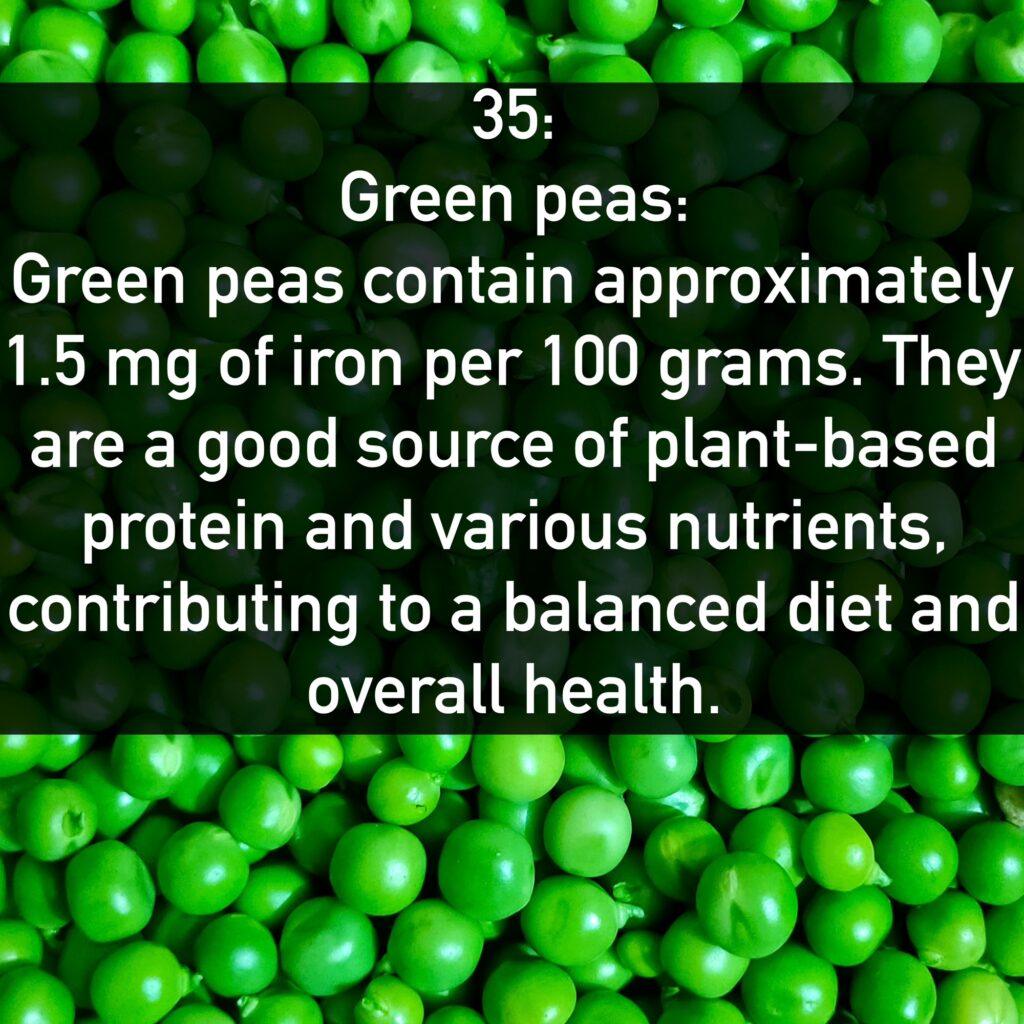
35: Green peas: Green peas contain approximately 1.5 mg of iron per 100 grams. They are a good source of plant-based protein and various nutrients, contributing to a balanced diet and overall health.

36: Almonds: Almonds contain about 3.7 mg to 5.4 mg of iron per 100 grams. They are a nutritious snack, rich in healthy fats, vitamin E, and magnesium, contributing to overall health and dietary iron intake.

Tips for Enhancing Iron Absorption: - Combine Iron Sources: Pairing non-heme iron sources with vitamin C-rich foods (like citrus fruits, bell peppers, or tomatoes) can enhance absorption. - Avoid Inhibitors During Meals: Certain substances, such as calcium, polyphenols (found in tea and coffee), and phytates (found in some grains and legumes), can inhibit iron absorption. It may be beneficial to consume these separately from iron-rich meals.

Conclusion: Incorporating a variety of these iron-rich foods into your diet can help maintain adequate iron levels. supporting overall health. If you have specific dietary concerns or conditions affecting iron absorption, consulting with a healthcare provider or a registered dietitian is advisable.


CLICK “NEXT” Below to Continue:

NEXT: Tips for Reading Food Labels and Toxic Ingredients to Avoid