Top 20 Zinc Rich Foods

Top 20 Zinc Rich Foods

Zinc-rich foods boost immunity, support wound healing, improve digestion, aid growth and development, support brain function, and help maintain healthy skin, hormones, and metabolism.Zinc is an essential mineral that plays a vital role in various biological functions, including immune system support, wound healing, and DNA synthesis. Here is a list of foods that are particularly high in zinc, grouped by category:

Animal Sources of Zinc:

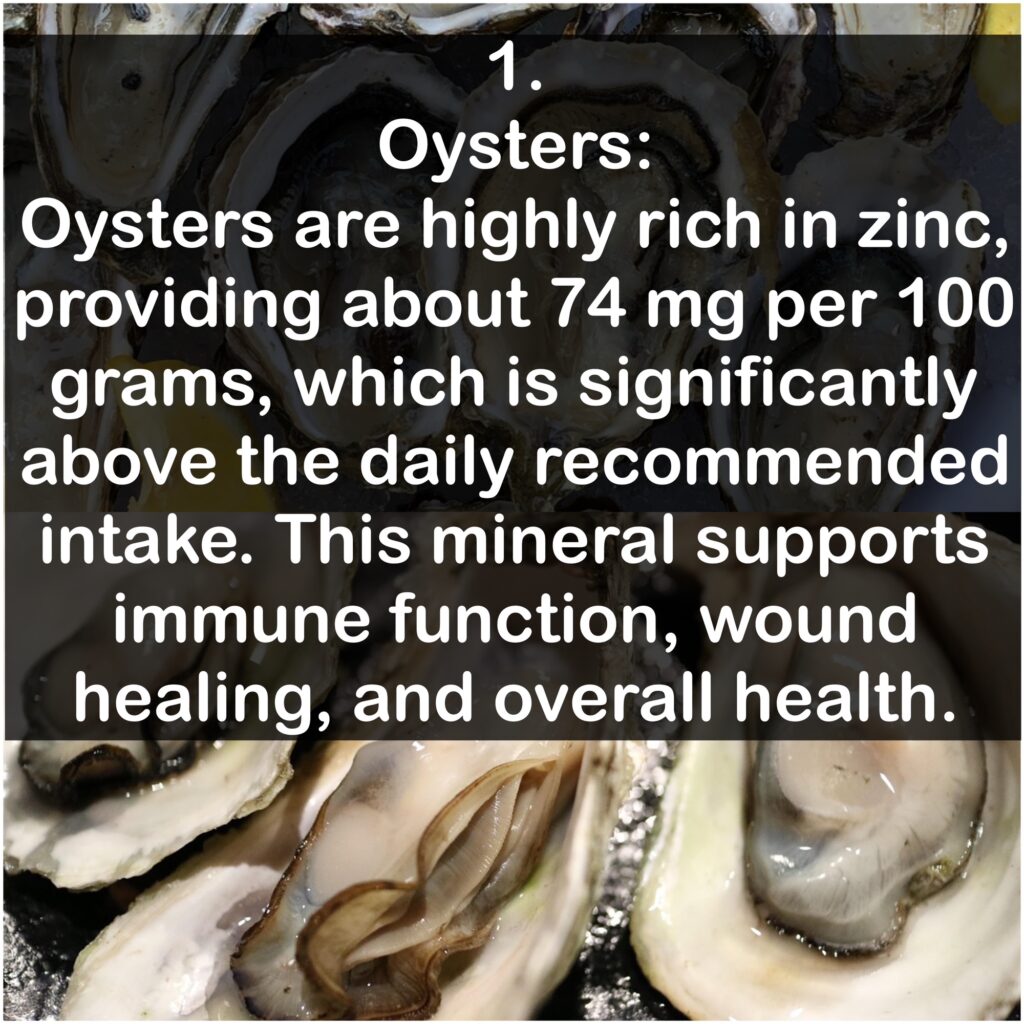
1. Oysters: Oysters are highly rich in zinc, providing about 74 mg per 100 grams, which is significantly above the daily recommended intake. This mineral supports immune function, wound healing, and overall health.

2. Clams: Clams are among the richest sources of zinc, offering about 74 mg per 100 grams. This high zinc content boosts immune function, supports wound healing, and helps maintain overall health.


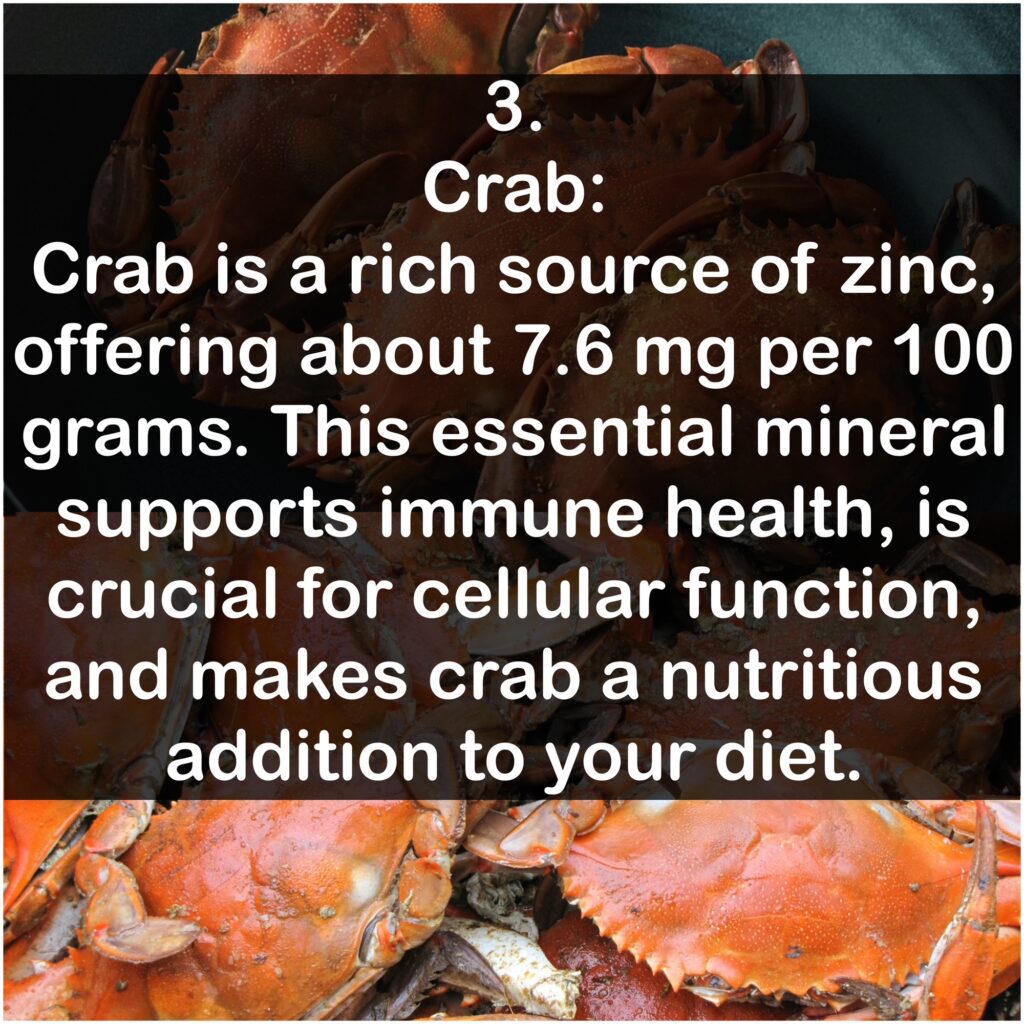
3. Crab: Crab is a rich source of zinc, offering about 7.6 mg per 100 grams. This essential mineral supports immune health, is crucial for cellular function, and makes crab a nutritious addition to your diet.

4. Mussels: Mussels are an excellent source of zinc, providing approximately 5.2 mg per 100 grams. This mineral is essential for immune function, protein synthesis, and overall cell health, making mussels a nutritious choice.

5. Lobster: Lobster contains about 3.4 mg of zinc per 100 grams, contributing to the daily recommended intake. This seafood is not only delicious but also contributes to immune health and cellular function, making it a nutritious addition to meals.

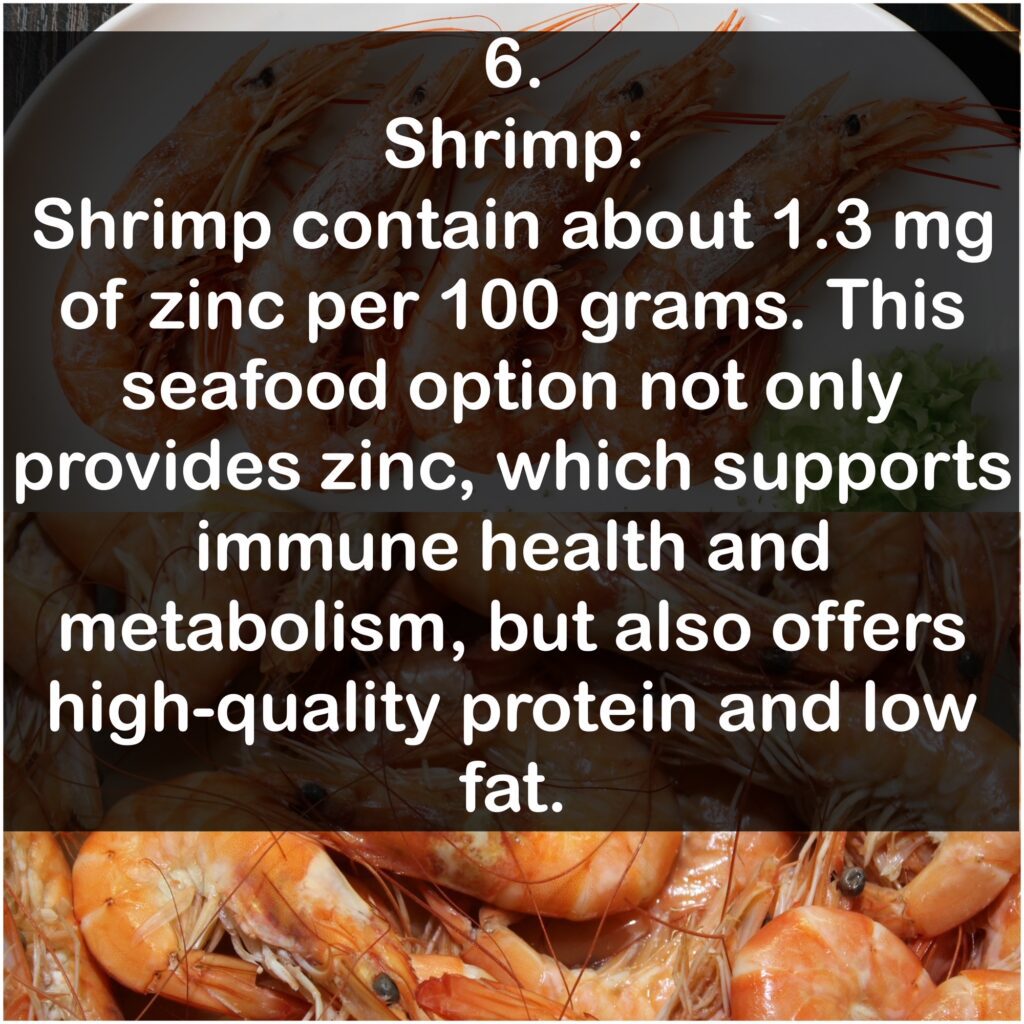
6. Shrimp: Shrimp contain about 1.3 mg of zinc per 100 grams. This seafood option not only provides zinc, which supports immune health and metabolism, but also offers high-quality protein and low fat.

7. Beef: Ground beef and various cuts (e.g., chuck, sirloin) are good sources of zinc. Beef is an excellent source of zinc, providing around 8.5 mg per 100 grams. This essential mineral supports immune function, DNA synthesis, and wound healing, making beef a nutritious addition to diets.

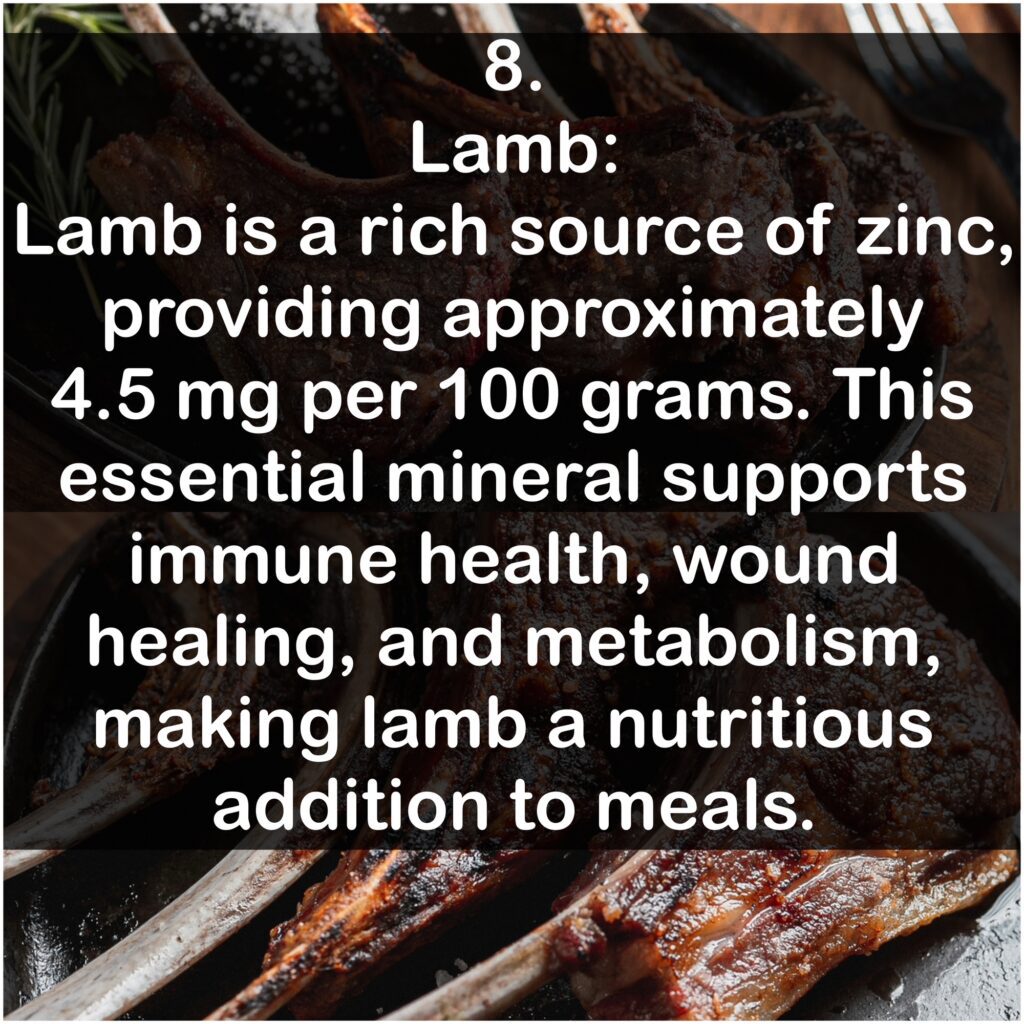
8. Lamb: Lamb is a rich source of zinc, providing approximately 4.5 mg per 100 grams. This essential mineral supports immune health, wound healing, and metabolism, making lamb a nutritious addition to meals.

9. Pork. Pork is a good source of zinc, Especially tenderloin and other cuts offering about 2.9 mg per 100 grams. This essential mineral plays a vital role in immune function, protein synthesis, and healing, making pork a nutritious option in diets.

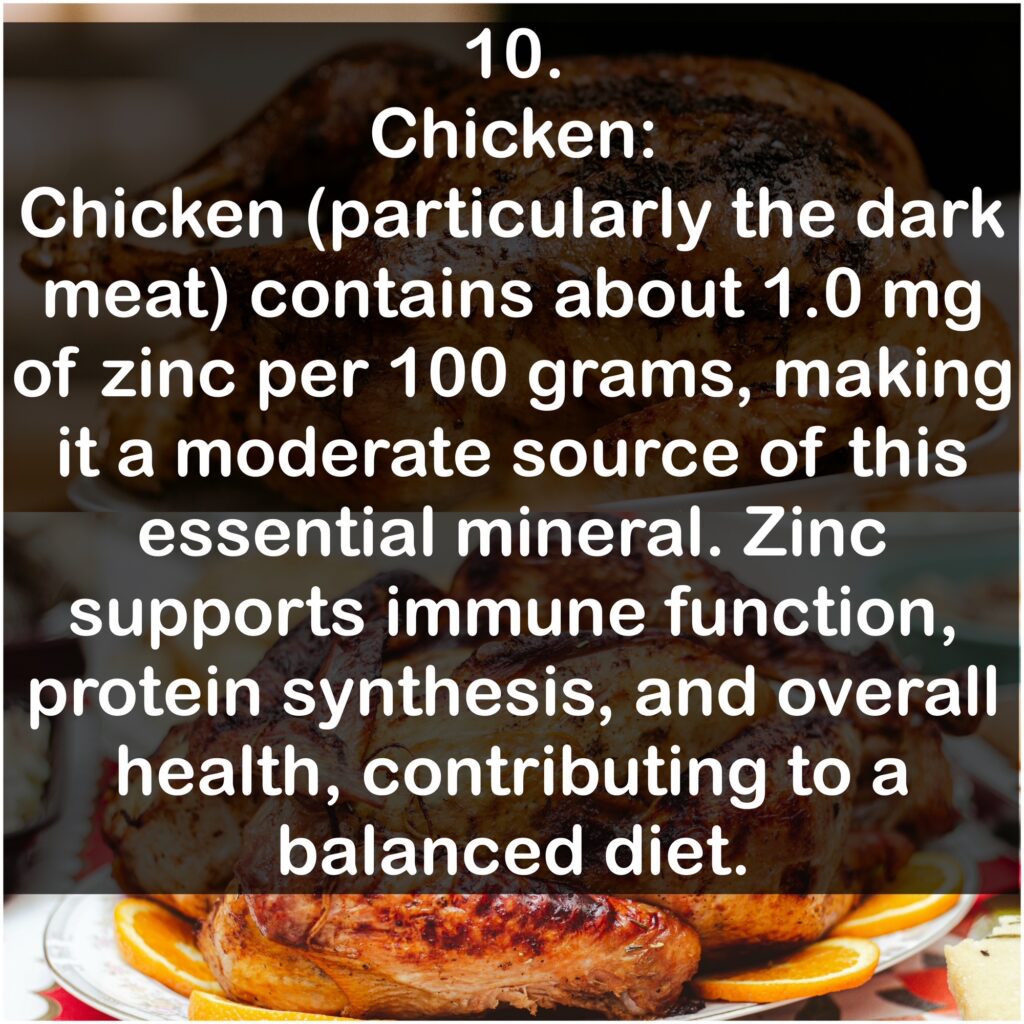
10. Chicken: Chicken (particularly the dark meat) contains about 1.0 mg of zinc per 100 grams, making it a moderate source of this essential mineral. Zinc supports immune function, protein synthesis, and overall health, contributing to a balanced diet.

11. Turkey. Similar to chicken, dark meat provides more zinc than white meat. Turkey provides approximately 1.4 mg of zinc per 100 grams. This lean meat is a nutritious option that supports immune health, protein synthesis, and overall wellness, making it a valuable addition to diets.

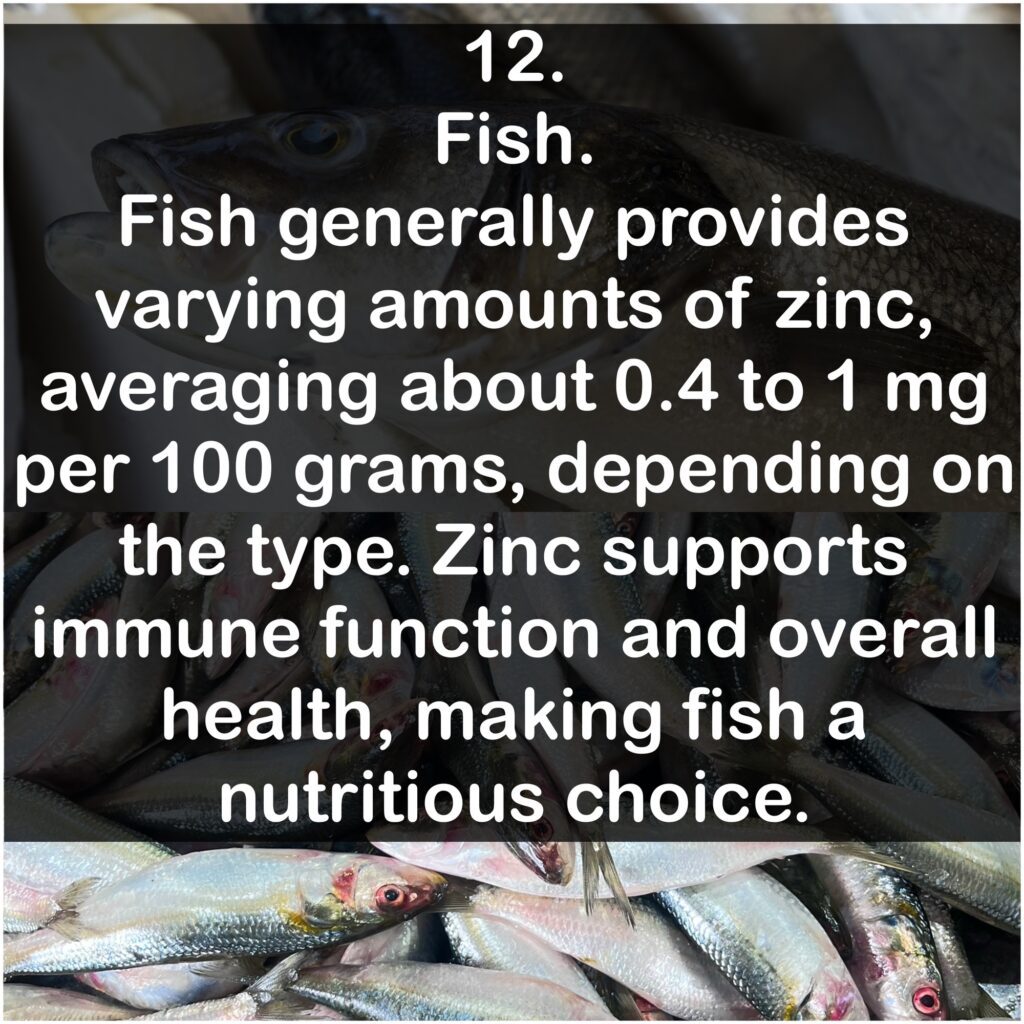
12. Fish. Fish generally provides varying amounts of zinc, averaging about 0.4 to 1 mg per 100 grams, depending on the type. Zinc supports immune function and overall health, making fish a nutritious choice.

Plant Sources of Zinc:

13. Legumes: Legumes, such as lentils, chickpeas, and beans (e.g., kidney beans, black beans), vary in zinc content, providing about 1-3 mg per 100 grams. They are a good plant-based source of zinc, supporting immune function and overall health.

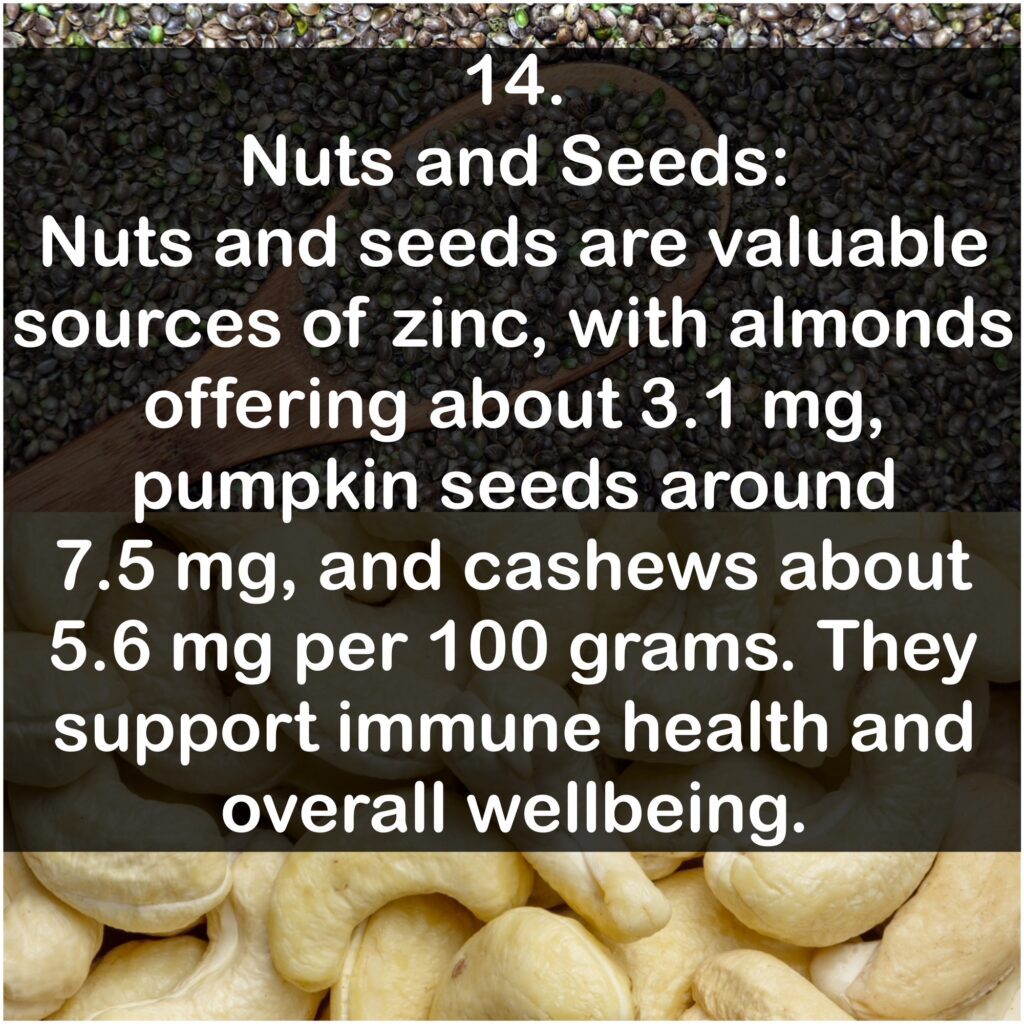
14. Nuts and Seeds: Nuts and seeds are valuable sources of zinc, with almonds offering about 3.1 mg, pumpkin seeds around 7.5 mg, and cashews about 5.6 mg per 100 grams. They support immune health and overall wellbeing.

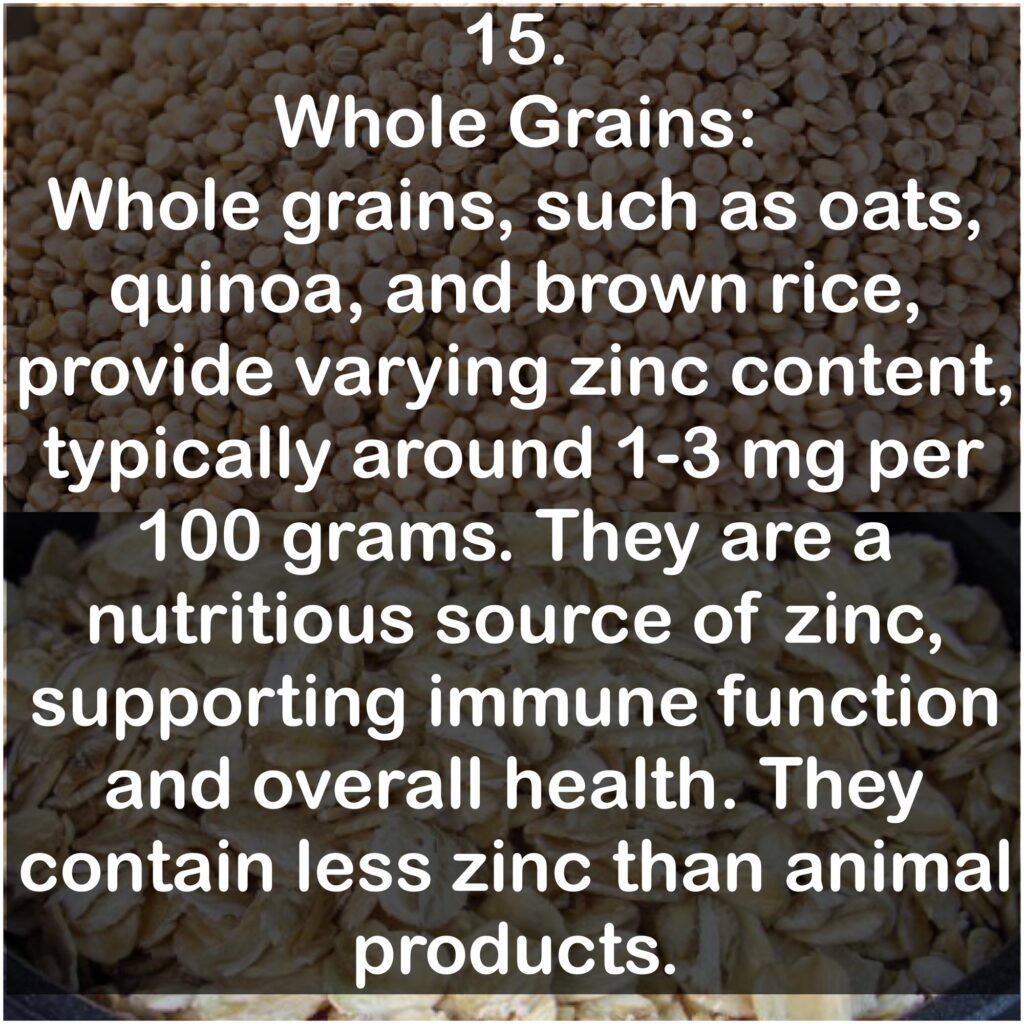
15. Whole Grains: Whole grains, such as oats, quinoa, and brown rice, provide varying zinc content, typically around 1-3 mg per 100 grams. They are a nutritious source of zinc, supporting immune function and overall health. They contain less zinc than animal products.

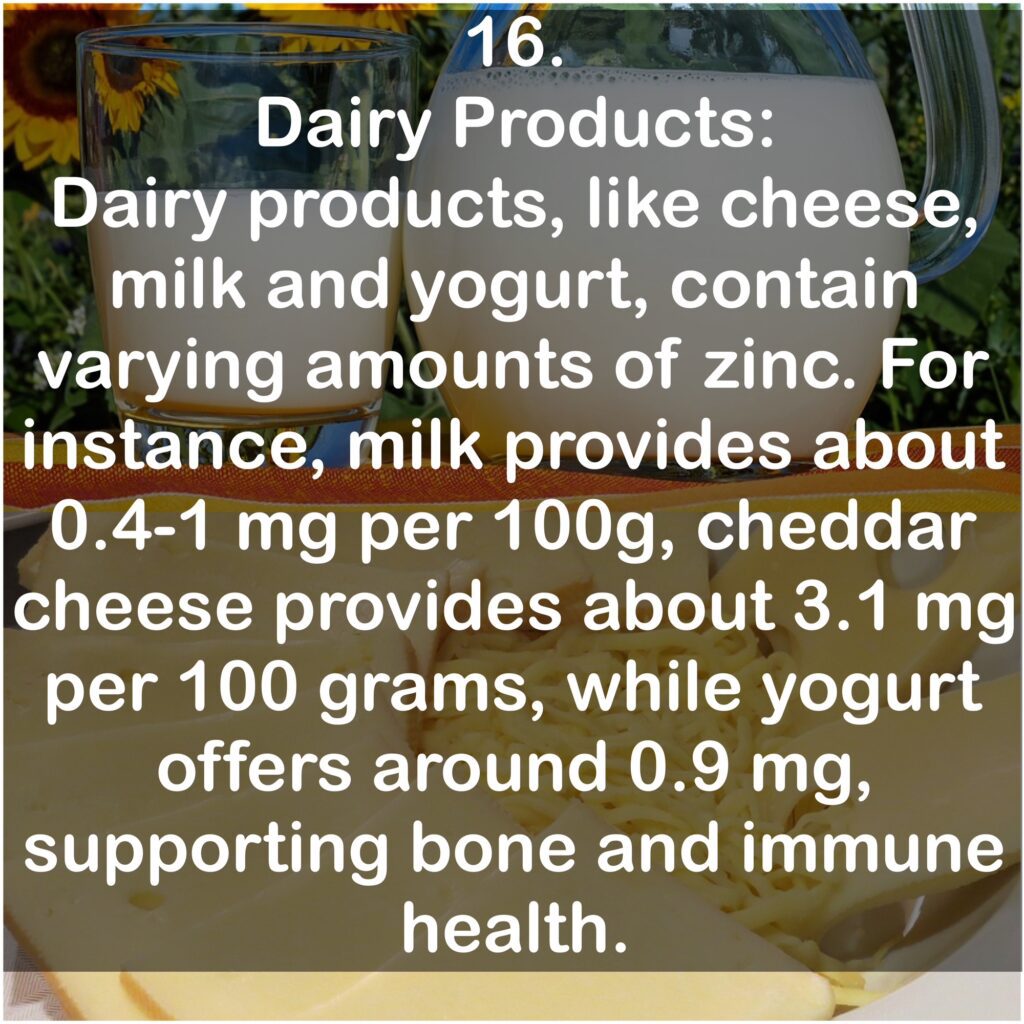
16. Dairy Products: Dairy products, like cheese, milk and yogurt, contain varying amounts of zinc. For instance, milk provides about 0.4-1 mg per 100g, cheddar cheese provides about 3.1 mg per 100 grams, while yogurt offers around 0.9 mg, supporting bone and immune health.

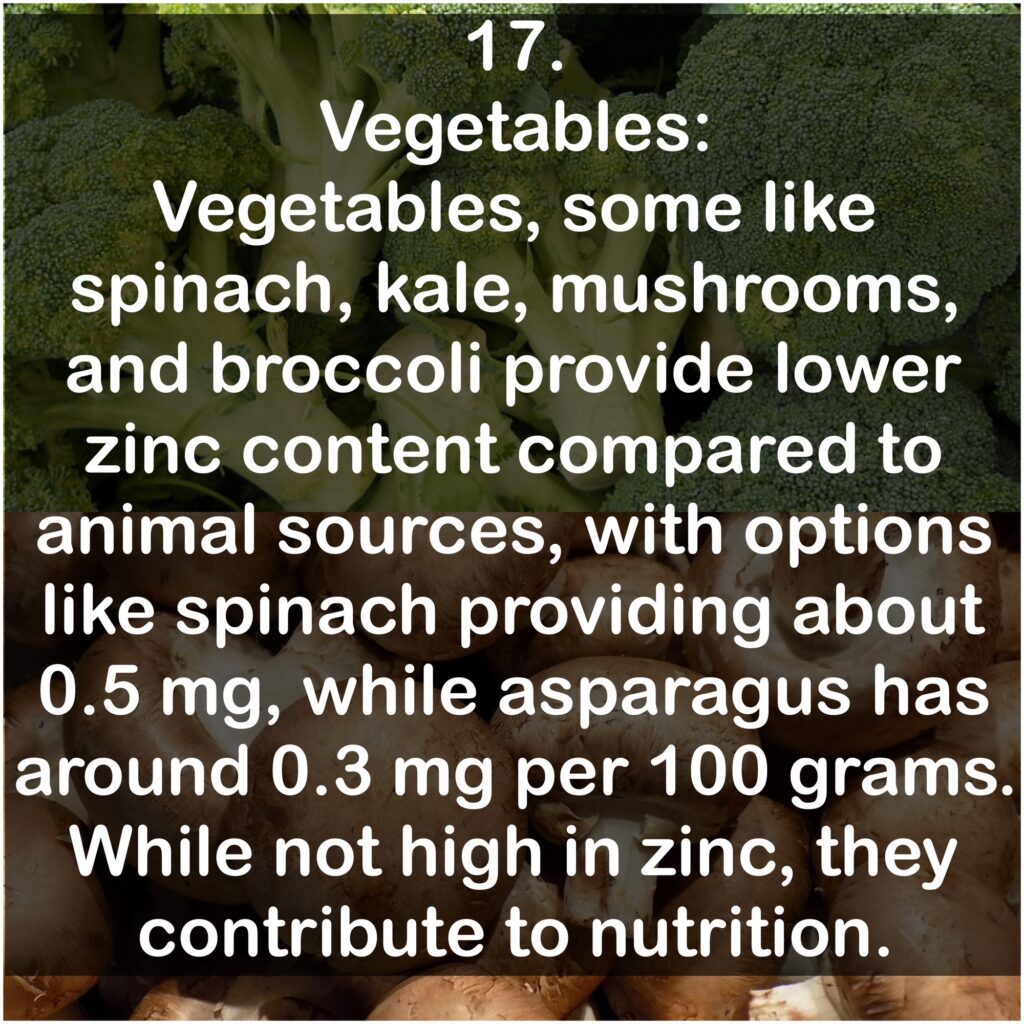
17. Vegetables: Vegetables, some like spinach, kale, mushrooms, and broccoli provide lower zinc content compared to animal sources, with options like spinach providing about 0.5 mg, while asparagus has around 0.3 mg per 100 grams. While not high in zinc, they contribute to nutrition.

Other Sources of Zinc

18. Fortified Cereals: Fortified cereals vary widely in zinc content, typically providing between 3 to 15 mg per serving, depending on the brand and formulation. They are a convenient way to boost zinc intake for overall health.

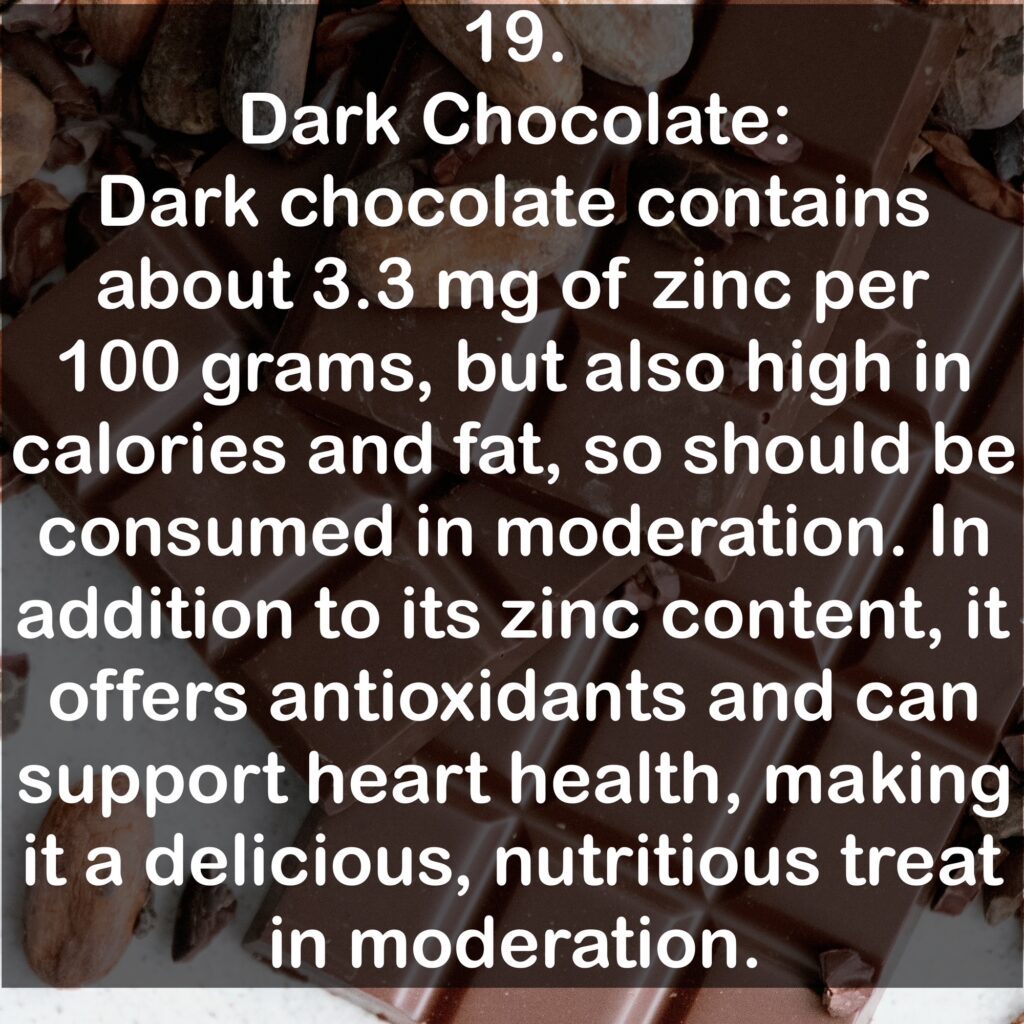
19. Dark Chocolate: Dark chocolate contains about 3.3 mg of zinc per 100 grams, but also high in calories and fat, so should be consumed in moderation. In addition to its zinc content, it offers antioxidants and can support heart health, making it a delicious, nutritious treat in moderation.

20. Nutritional Yeast: Nutritional yeast is a good source of zinc, providing about 1.0 mg per tablespoon (15 grams). Often fortified with zinc, It's popular among vegetarians and vegans for its cheesy flavor and is rich in B vitamins, supporting overall health and nutrition.

Summary: While animal-based foods generally provide higher amounts of zinc compared to plant-based sources, a well-balanced diet including a variety of these foods can help ensure adequate zinc intake. It's essential to consider dietary needs and consult with a healthcare professional if you have concerns regarding zinc deficiency.


0%
4676

Diet and Fitness Quiz

HOW MUCH DO YOU KNOW ABOUT DIET AND FITNESS?

Test Your Knowledge From this Short Quiz:


Start The Quiz Below:

(10 Questions)

The average score is 81%

1 / 10

1) You can lose weight by only performing weight training?

2 / 10

2) What nutrients can the body live only a few days without?

3 / 10

3) To lose a pound of fat, how many more calories do you have to burn than take in?

4 / 10

4) It is best to lose:

5 / 10

5) Which of these is cardiovascular exercise?

6 / 10

6) What’s the most important meal of the day?

7 / 10

7) The amount of energy the body gets from food is measured in

8 / 10

8) What is the main reason for eating a wide variety of foods?

9 / 10

9) Which drink provides the most complete nourishment?

10 / 10

10) Which of the following nutrients provides energy to the body?

You’ve Completed The Quiz!

Subscribe (Free) and Join Our Diet, Health and Wellness Community to Get Your Quiz Result


“MyHealthfulDiet.Com” offers expert-designed nutrition tips to support healthy eating, weight loss, and overall wellness through balanced, science-backed dietary guidance. If you can relate to the daily struggle of trying to Eat Healthy and Stay Fit, you have come to the right place. We will keep you updated with our Free Weekly Diet, Health and Wellness Updates.


Are you ready for your transformation? Do not let life pass you by, Learn to control it and live it like you are meant to! Remember, this is the only body you have.

We won't spam your inbox and you can unsubscribe anytime.


Enter Your Name, Email and Country Below to Unlock Your Quiz Result and Join our Free Community:

Your score is

The average score is 81%

0%


CLICK “NEXT” Below to Continue:

NEXT: Top 10 Hydrating Drinks