Health Benefits of Soluble and Insoluble Fiber

Health Benefits of Soluble and Insoluble Fiber

Incorporating soluble and insoluble fiber into your diet aids digestion, regulates blood sugar, promotes heart health, and supports weight management for overall wellness.Fiber is an essential part of a healthy diet, and it can be categorized into two main types: soluble and insoluble fiber. Both types offer a variety of health benefits.

Here’s a list of food known for their soluble fiber content: It can be found in foods such as oats, beans, lentils, fruits, and some vegetables like Carrot, Beet, Brussels Sprouts, Squash, Eggplant, Okra, Broccoli, Artichokes, Spinach.

Soluble Fiber Definition: Soluble fiber is a type of dietary fiber that dissolves in water to form a gel-like substance. It is beneficial for digestion, helps regulate blood sugar levels, lowers cholesterol, and can aid in weight management by promoting a feeling of fullness.

Benefits of Soluble fiber:

1. Heart Health: Soluble fiber helps lower cholesterol levels by reducing the absorption of dietary cholesterol. This can help reduce the risk of heart disease.

2. Blood Sugar Control: It slows digestion and the absorption of sugar, stabilizing blood sugar levels. This is particularly beneficial for individuals with diabetes.


3. Digestive Health: Soluble fiber promotes healthy gut bacteria, acting as a prebiotic and improving overall gut health.

4. Weight Management: By slowing digestion and increasing feelings of fullness, soluble fiber can help control appetite and aid in weight loss.

5. Improved Nutrient Absorption: It can enhance the absorption of essential nutrients, including minerals like calcium and magnesium.

Tips for Incorporating Soluble Fiber into Your Diet:

1. Start Your Day with High-Fiber Breakfasts: - Oatmeal: Begin your day with oatmeal topped with fruits such as berries or bananas for added soluble fiber. - Smoothies: Blend fruits rich in soluble fiber (like bananas and avocados) with leafy greens and nut butters for a nourishing breakfast.

2. Incorporate Beans and Legumes: - Salads and Soups: Add canned beans (like chickpeas or black beans to salads or soups, boosting fiber intake significantly. - Snacks: Try spiced roasted chickpeas or lentil hummus as a high-fiber snack.

3. Add Fruits and Vegetables - Snack on Fruits:Choose fruits with high soluble fiber content for snacks, such as apples, pears, and citrus fruits. - Creative Cooking: Incorporate vegetables like carrots, sweet potatoes, and Brussels sprouts into your meals. Roasting or steaming enhances their flavor and nutritional value.

4. Utilize Whole Grains: - Whole Grain Products: Switch to whole grain breads, pastas, and cereals that contain oats, barley, or whole wheat, which are higher in soluble fiber. - Quinoa and Barley: Use quinoa or barley as a base for salads or bowls instead of white rice or pasta.

5. Experiment with Flaxseeds and Chia Seeds: - Smoothies: Add ground flaxseeds or chia seeds to smoothies, yogurt, or oatmeal for an extra fiber boost. - Puddings:Mix chia seeds with almond milk and a sweetener to create a delicious chia pudding for breakfast or snacks.

Plan Balanced Meals: - Mix and Match: Create meals that include a variety of soluble fiber sources—combine vegetables, fruits, and legumes with healthy proteins and fats. - Batch Cooking: Prepare high-fiber meals in bulk (like chili or vegetable soups) that keep well and can be frozen for later use.

7. Stay Hydrated; - Drink Water: Increase soluble fiber intake gradually while also drinking plenty of water to help keep digestion smooth and prevent discomfort.

8. Read Labels: - Check Fiber Content: When purchasing packaged foods, check nutrition labels for soluble fiber content, and choose options that meet your dietary goals.

9. Set Realistic Goals: - Gradual Integration: Aim to gradually include more soluble fiber into your diet. Start with small changes and increase as your body adjusts.

Insoluble Fiber Definition: Insoluble fiber does not dissolve in water and adds bulk to the stool. Here’s a list of food known for their insoluble fiber content: Wheat (One of the richest sources of insoluble fiber), Oatmeal, Brown rice, Quinoa, Beans, Lentils, Peas, Almonds, Walnuts, Sunflower seed, Apple, Pear, Berries, Broccoli, Cauliflower, Spinach, Potatoes, Kale, Collard green, Swiss chard, Popcorn, Wheat germ, and Flaxseed.

Health Benefits of Soluble and Insoluble Fiber

1. Digestive Health: Insoluble fiber promotes regular bowel movements and helps prevent constipation by adding bulk to the stool and facilitating its passage through the digestive tract.

2. Gut Health: It supports a healthy gut by preventing bowel disorders such as diverticulitis and hemorrhoids.

3. Weight Management: Similar to soluble fiber, insoluble fiber can help with weight management by promoting satiety.

4. Blood Sugar Regulation: While more indirectly, it can also play a role in controlling blood sugar levels by improving overall digestive health.

5. Detoxification: It helps to regulate the elimination of waste and toxins from the body.

Tips for Adding Insoluble Fiber

1. Choose Whole Grains: - Opt for whole grain bread, pasta, and cereals instead of their refined counterparts. Look for labels that specify "100% whole grain." - Try brown rice, quinoa, barley, and bulgur as substitutes for white rice and pasta.

2. Snack Smart: - Keep nuts and seeds on hand for quick snacks. Almonds, walnuts, and sunflower seeds are great choices. - Air-popped popcorn is a low-calorie snack high in insoluble fiber.

3. Add Vegetables: - Incorporate a variety of vegetables into your meals. Leafy greens (like spinach and kale), carrots, cucumbers, and bell peppers are excellent sources. - Try roasting, steaming, or adding vegetables to stir-fries to enhance flavor and fiber content.

4. Fruits with Skin: - Consume fruits with the skin on, such as apples, pears, and peaches. The skin is where a lot of the insoluble fiber is found. - Consider adding berries to your breakfast cereal or yogurt.

5. Legumes and Beans: - Include beans, lentils, and chickpeas in salads, soups, and stews. They are not only good sources of fiber but also protein.

6. Experiment with Fiber-Enhanced Foods: - Look for fiber-fortified products, such as cereals and granola bars, but check labels to avoid excessive sugars and additives.

7. Include High-Fiber Snacks: - Use whole grain crackers or rice cakes topped with hummus or nut butter for a healthy snack. - Create vegetable dips using fiber-rich vegetables like carrots and celery.

8. Stay Hydrated: - When increasing fiber intake, ensure you drink plenty of water. This helps fiber function effectively and reduces the risk of bloating or discomfort.

9. Gradual Changes: - Increase your fiber intake gradually over several days or weeks. This gives your digestive system time to adjust.

10. Read Nutrition Labels: - Pay attention to nutrition labels when shopping. Choose products with higher fiber content and fewer added sugars.

Sample Day of High Insoluble Fiber Meals

- Breakfast: Oatmeal made with whole oats topped with sliced apples and a sprinkle of nuts. - Snack:Raw vegetables (carrot sticks, cucumber slices) with hummus.

- Lunch: Quinoa salad with black beans, cherry tomatoes, bell peppers, and avocado. - Snack: A handful of almonds or a piece of whole fruit.

- Dinner: Stir-fried brown rice with broccoli, carrots, and Tofu.

Incorporating both types into your diet can lead to improved digestive health, heart health, stable blood sugar, and effective weight management.

Making small, consistent changes to your diet can significantly improve your fiber intake. It's important to listen to your body and make adjustments as needed based on your comfort and dietary preferences. If you have specific health concerns or dietary restrictions, consult a healthcare provider or a registered dietitian for personalized advice.

Conclusion Both soluble and insoluble fibers are vital for a balanced diet and contribute to overall health in complementary ways. Including a variety of fiber-rich foods can help you reap the full spectrum of health benefits associated with fiber. Recommended daily intake varies but is generally about 25 grams for women and 38 grams for men.

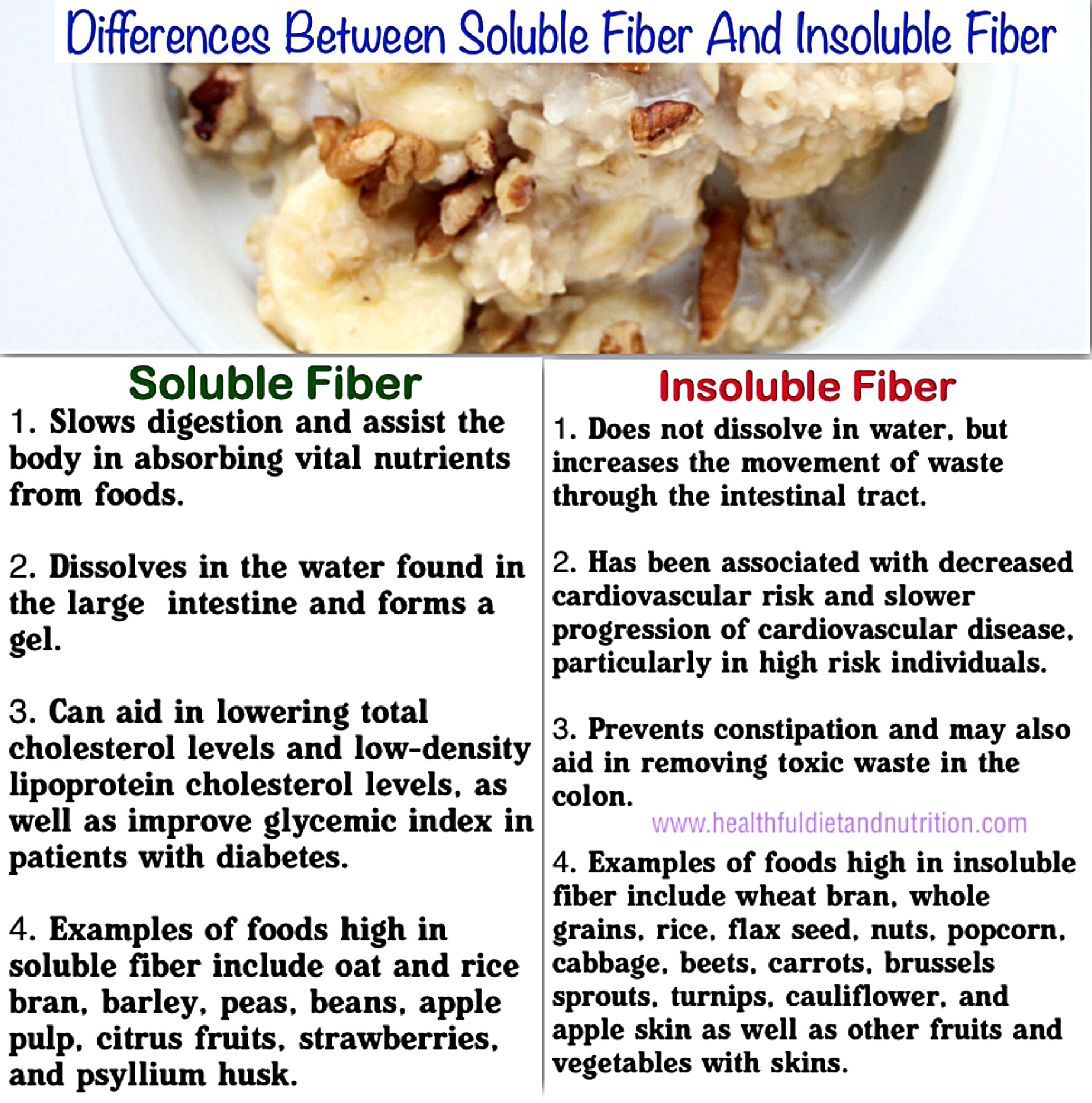
Differences Between Soluble And Insoluble Fiber


Click “NEXT” Below For More:

NEXT: Benefits of Starchy and Non-Starchy Vegetables